
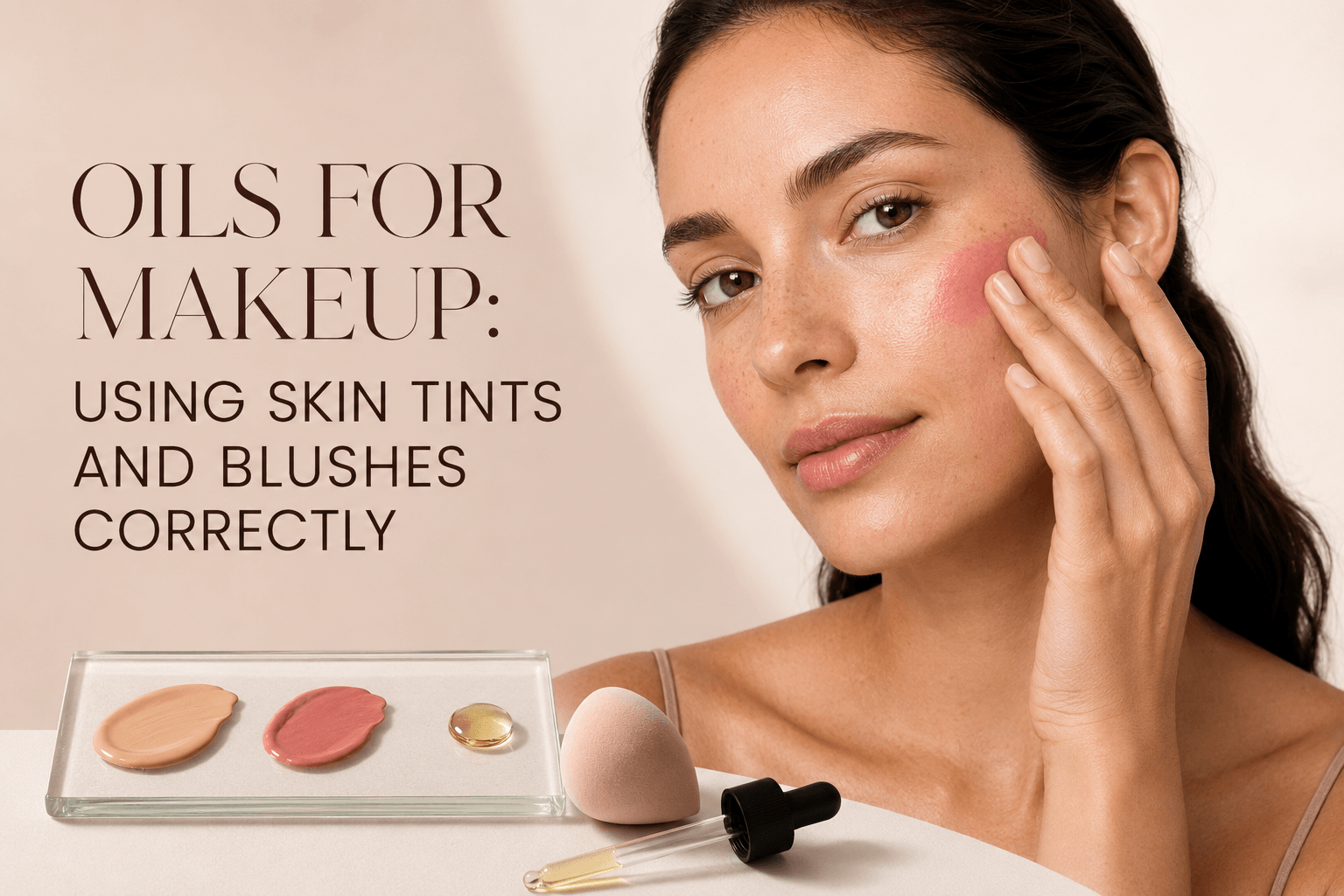
Introduction: Better Makeup Can Begin With One Tiny Drop
Skin tint should create an even, natural-looking base. Blush should add believable color without sitting visibly on top of the skin. When either product looks patchy, dry, or difficult to blend, the problem may not be the makeup itself. Your preparation and application technique may need adjusting.
A tiny amount of facial oil can add slip, soften dry-looking areas, and help complexion products blend with less pulling. However, more oil does not mean more glow. Too much can make skin tint separate, cause blush to move, and shorten makeup wear.
The goal is not to cover your entire face in oil. It is to learn where, when, and how to use a trace amount for a controlled finish.
Start With the Correct Application Order
Begin with clean skin and apply your normal skincare products. If your complexion feels dry, press a trace of facial oil onto the areas that need it most, usually the cheeks or around the mouth. Give the oil time to settle until the surface feels comfortable rather than slippery.
During the day, apply sunscreen according to its directions before starting your makeup. The American Academy of Dermatology recommends applying moisturizer or sunscreen before makeup.
Never mix facial oil directly into sunscreen or a skin tint that you rely on for sun protection. Diluting an SPF product may prevent you from applying the even, complete layer described on its label.
The basic order is:
- Cleanse.
- Apply your regular skincare.
- Press a trace of oil onto dry-feeling areas.
- Allow the oil to settle.
- Apply sunscreen during the day.
- Apply skin tint.
- Add blush.
- Finish with a targeted touch of oil only if more radiance is needed.
Choose Your Oil by Finish
The best oil for makeup is not necessarily the richest one. It is the oil that provides the right amount of slip for your skin and chosen finish.
CocoJojo Squalane Oil derived from olives has a clear appearance and lightweight feel. It works well when you want subtle radiance without a noticeably oily layer.
CocoJojo Jojoba Golden Oil has slightly more body and can help fast-setting complexion products move more easily across dry-looking areas. It is particularly useful for a soft satin finish.
If you are unsure which texture to choose, read the complete guide to the best skin tint oils for a natural, radiant look.
How to Apply Skin Tint Over Facial Oil
Skin preparation is the safest and most predictable way to combine oil with skin tint.
Press the smallest trace of oil onto the areas where makeup normally catches. Avoid automatically covering the whole face, especially if your forehead, nose, or chin becomes shiny during the day. Wait until the oil has settled before continuing.
Place a small amount of skin tint on the back of a clean hand or a clean makeup palette. Apply it first to the center of the face, where people often want the most coverage. Blend outward using light pressure.
Build the tint in thin layers. A thick first layer is more likely to move, crease, or collect around natural facial lines.
Use pressing and tapping movements instead of rubbing. Rubbing can lift your skincare and create uneven areas before the tint has had time to settle.
Can You Mix Oil Directly With Skin Tint?
You can test mixing a trace of oil with one application of skin tint, but not every formula will remain stable.
Place your usual amount of tint on a clean palette. Touch a clean fingertip or brush lightly to the oil, then mix that tiny trace into the tint. You usually need much less than one complete drop.
Check the mixture before applying it to your whole face. If it looks grainy, watery, or separated, do not use that combination. Apply the oil beneath the tint instead.
Never pour oil into the original skin tint bottle. This can change the product’s texture, coverage, wear, and cleanliness.
How to Apply Blush Without Disturbing Skin Tint
After applying your tint, wait briefly before adding blush. The base should feel flexible but should not move immediately when touched.
For cream or liquid blush, place two or three small dots high on the outer cheek. Blend upward toward the temple using clean fingertips, a dense brush, or a damp sponge. Begin with less color than you think you need. Building gradually creates a more natural result than trying to soften an oversized amount.
If the skin tint underneath is very sheer, tap the blush into place. Do not drag it across the cheek.
For more cheek-specific advice, explore natural blush alternatives and facial oils for dewy makeup.
How to Use Oil With Cream, Liquid, and Powder Blush
Cream blush can be blended with the smallest trace of jojoba oil on a clean palette when its texture sets too quickly. Mix only enough for one application.
Liquid blush is usually already fluid. Apply it normally first, then decide whether additional radiance is necessary. Adding oil too early may make a strongly pigmented liquid blush spread farther than expected.
Powder blush needs a settled, non-slippery base. Let your facial oil and skin tint absorb before applying powder. Never place liquid oil directly into a powder blush pan. It can harden the surface and produce uneven color pickup.
For a dewy finishing touch, press a trace of squalane onto the upper cheekbone after the blush is blended. Keep it above the fullest part of the cheek so the finish looks intentional rather than generally shiny.
Choose the Right Application Tool
Fingertips work well with skin tints and cream blushes because natural warmth helps the formulas spread. Use clean hands and press the product into the skin.
A damp makeup sponge creates a sheer, blended finish. Squeeze out excess water before use. The sponge should feel lightly damp, not wet. Bounce it over the skin rather than wiping.
A dense brush provides more controlled coverage. Use short tapping movements around the nose and center of the face, then soften the edges with lighter strokes.
Whichever tool you select, keep it clean. Repeatedly using an unwashed sponge or brush can affect both application and product cleanliness.
Adjust the Technique for Your Skin Type
Dry-feeling skin may benefit from targeted oil beneath skin tint. Focus on areas where makeup catches instead of increasing the amount across the whole face.
Combination skin often needs oil only on the outer cheeks. Keep it away from the T-zone if that area already develops noticeable shine.
If your skin is oily or blemish-prone, a facial oil may not be necessary every day. Choose products labeled non-comedogenic when possible, begin with a small test area, and monitor how your skin responds.
Sensitive skin benefits from a simpler routine. Introduce one new product at a time and patch test before using it across the face.
Fix Common Oil and Makeup Problems
If your skin tint pills, you may have used too many layers or applied them too quickly. Allow each layer more time to settle. Press away the affected area and reapply a thin amount instead of rubbing the entire face.
If the tint separates, excess oil is usually the first thing to check. Press a clean sponge or tissue gently over the area to lift the surplus, then add a light layer of tint.
If blush disappears while blending, the base may have too much slip. Let the skin tint settle longer, then apply the blush with a tapping motion.
If the finish looks greasy, do not immediately cover the whole face with powder. Blot the forehead, sides of the nose, and chin first. Preserve the controlled radiance on the upper cheeks.
Avoid Unsafe Homemade Makeup Shortcuts
Facial oil can adjust the finish of a completed cosmetic product, but it is not a controlled makeup pigment. Do not use food coloring, crushed fruit, craft pigment, decorative mica, cinnamon, or essential oils as homemade skin tint or blush.
The FDA explains that cosmetic color additives must be permitted for their intended use. Use finished cosmetic tints and blushes for color, then use facial oil only to adjust slip or radiance.
Patch test every new facial oil. Use it externally only, avoid broken skin and the immediate eye area, and stop use if irritation occurs.
The Quick One-Drop Makeup Routine
Apply your skincare and press a trace of oil onto dry-feeling areas. Allow it to settle, then apply sunscreen during the day.
Blend a thin layer of skin tint from the center of the face outward. Add cream or liquid blush high on the cheeks using tapping movements. If you want more radiance, finish with the faintest touch of squalane on the upper cheekbones.
That is usually all you need. The most polished finish comes from precise placement, thin layers, and patient blending, not from applying more product.
Conclusion: Let Oil Improve the Finish
Facial oil works best as a supporting step. It can help skin tint spread across dry-looking areas, soften the edges of blush, and create targeted radiance. It should not make your makeup feel unstable or excessively glossy.
Begin with less than one drop, apply oil only where it is needed, and keep every mixture outside the original makeup container. If the products separate, return to the simpler method of using oil during skin preparation.
Explore CocoJojo’s collection of natural cosmetic oils to compare lightweight and richer textures for your preferred makeup finish. With the right oil and application technique, your skin tint and blush can look smoother while still allowing real skin texture to remain visible.