
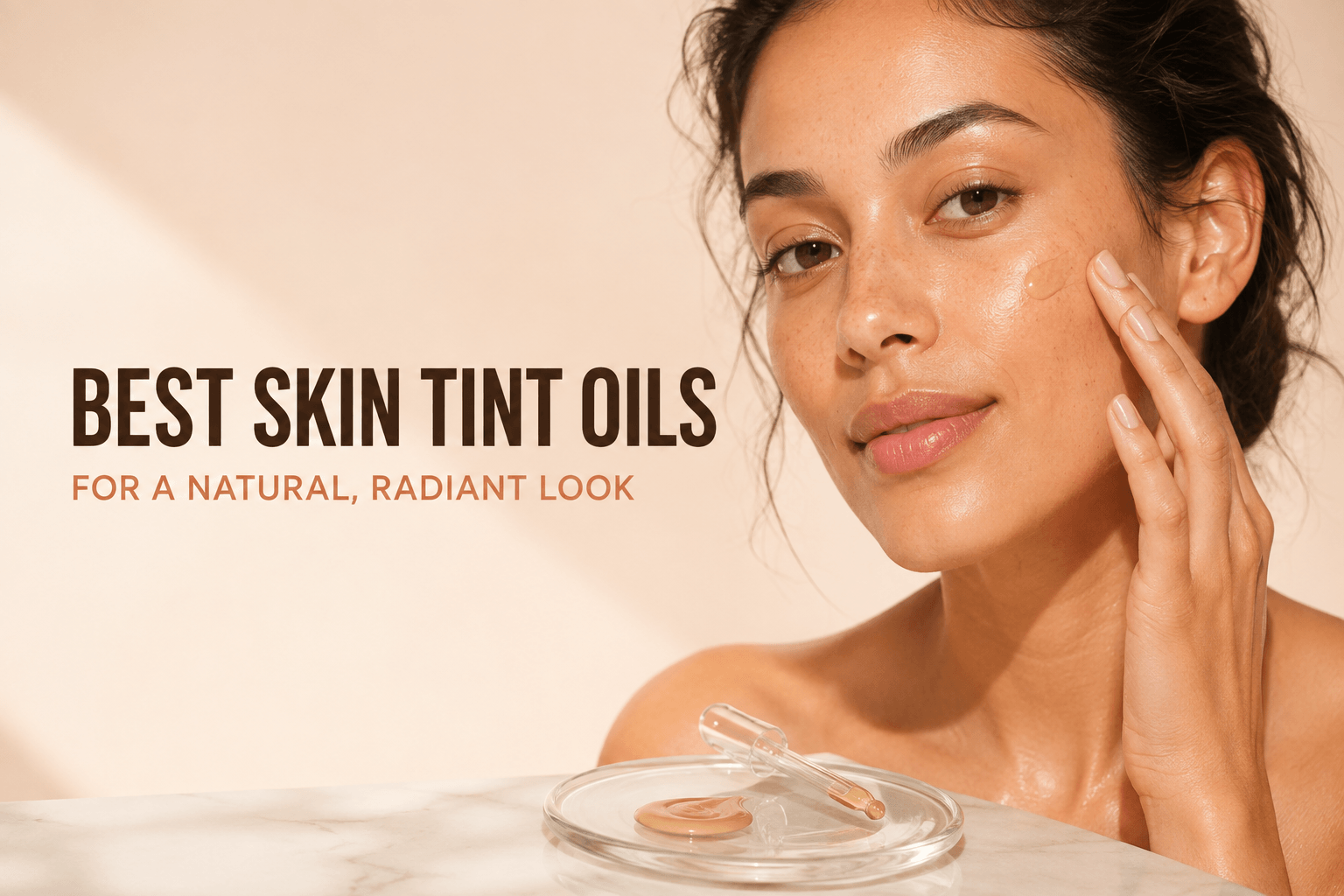
Introduction: The One-Drop Difference
A good skin tint should look like your skin on a well-rested day. It should soften uneven-looking areas while allowing freckles, natural texture, and dimension to remain visible. Unfortunately, some skin tints catch around dry areas, settle unevenly, or leave the complexion looking flat.
The solution may be a tiny trace of facial oil. The right oil can add slip, soften dry-looking texture, and create a more natural, radiant finish. The key word is tiny. Too much oil can make makeup separate, fade, or appear greasy.
Here are the best skin tint oils for different finishes, along with simple ways to use them without overwhelming your makeup.
What Does “Skin Tint Oil” Actually Mean?
A skin tint oil is not necessarily a naturally colored oil that replaces foundation. Plain facial oils do not provide controlled coverage or a predictable cosmetic shade. In this guide, the term describes a facial oil used beneath a finished skin tint, mixed with a single portion on a clean palette, or tapped over makeup for targeted radiance.
Your color should still come from a properly formulated cosmetic tint. The FDA explains that makeup color additives must be approved for their intended use. Facial oil should adjust the texture and finish of your makeup, not replace approved cosmetic pigment.
1. Squalane Oil: Best Overall for Weightless Radiance
Squalane Oil derived from olives is the most versatile choice when you want glow without a heavy or noticeably oily layer. It has a clear appearance, smooth spread, and light feel that is less likely to noticeably change the shade of your skin tint.
Press the smallest amount onto moisturized skin and allow it to settle before applying sunscreen and makeup. You can also blend a trace with one application of skin tint on a clean palette. If the formulas separate, use the squalane beneath the tint instead.
Squalane works especially well for sheer makeup, natural daytime looks, and anyone who prefers a polished glow instead of a wet finish.
2. Jojoba Oil: Best for a Soft Satin Finish
Jojoba Golden Oil offers controlled slip with slightly more body than squalane. It can help a fast-setting tint spread more smoothly across the cheeks and around dry-looking areas.
Unrefined jojoba has a naturally golden appearance, but it should not be treated as reliable makeup pigment. Its main value is the soft, flexible texture it gives the complexion.
Place your usual amount of skin tint on a clean palette. Touch a clean fingertip or brush to the jojoba oil, then blend that trace into the tint. Apply it in thin layers. This method is particularly useful when you want a natural satin glow without coating the entire face in oil.
3. Rosehip Oil: Best for Warm-Looking Radiance
Unrefined Rosehip Oil naturally has an amber or orange-gold character. Under a sheer tint, a very small amount may create a warmer-looking base on some complexions.
Apply a trace to moisturized skin and let it absorb before continuing with sunscreen and makeup. Placing the tint over the oil usually gives a more controlled result than mixing both products together.
Rosehip oil is better suited to warm, peach, golden, or neutral makeup looks. Its natural color can vary, so test it in daylight before using it across the entire face. If you want to compare techniques, COCOJOJO’s guide to natural oil blush alternatives explains how facial oils can also soften the finish of cheek color.
4. Deodorized Argan Oil: Best for Dry-Feeling Skin
When skin tint catches around dry patches, Deodorized Argan Oil can provide a more cushioned base. The deodorized version is useful for people who want the richer feel of argan oil without its stronger natural aroma.
Press a very small amount onto the driest areas, such as the outer cheeks or around the mouth. Let it settle before applying the rest of your routine. Avoid covering the entire face unless your skin genuinely needs that richer finish.
Argan oil is best used as skin preparation rather than a glossy topper. Applying too much over finished makeup can reduce wear and make the tint move.
5. Sea Buckthorn Oil: Best for Controlled Golden Warmth
Unrefined Sea Buckthorn Oil has a naturally rich golden-orange color. This makes it visually interesting, but it is also the least forgiving oil in this list.
Use only a heavily diluted trace blended with a lighter oil such as squalane. Test the mixture on a small area before applying it across the face. Its color can appear different across skin tones, stain light fabrics, or noticeably change a pale skin tint.
Sea buckthorn oil should be considered an optional radiance layer, not a substitute for finished cosmetic pigment. Keep it away from the eyes and use clean hands or tools.
How to Use Facial Oil With Skin Tint
Begin with cleansed, moisturized skin. Press a tiny amount of your chosen oil onto areas that need more softness, then give it time to settle. Apply sunscreen according to its directions and let it form an even layer before beginning your makeup. Do not mix facial oil directly into sunscreen.
Apply your skin tint in thin layers using clean fingertips, a brush, or a damp sponge. If you want more glow, tap a trace of squalane or jojoba onto the upper cheekbones after the tint has set.
When mixing oil and tint, combine only enough for one application on a clean palette. Never pour oil into the original makeup bottle, since this can alter its texture, wear, and cleanliness.
Choose the Oil by Finish, Not Color
For a weightless dewy finish, choose squalane. For balanced slip and a soft satin look, try jojoba. Rosehip suits warm-looking radiance, while argan adds cushion to dry-feeling areas. Sea buckthorn is a specialist option for carefully controlled golden warmth.
Your skin type, climate, sunscreen, and makeup formula can all change the result. If your skin tint pills or separates, use the oil during skin preparation instead of mixing it with the tint.
Patch test every new facial oil before using it across your face. Stop using it if irritation develops, avoid broken skin, and keep products away from the immediate eye area unless they are intended for that use.
Common Skin Tint Oil Mistakes
The most frequent mistake is using too much. A full drop may already be excessive for one application of makeup. Begin with a trace and add more only if the complexion still looks dry.
Avoid using kitchen ingredients, food coloring, craft pigment, decorative mica, or essential oils as homemade skin tint. A natural origin does not automatically make an ingredient suitable for facial makeup. Facial oils should also never be treated as sunscreen or mixed into an SPF product.
Finally, do not choose the darkest oil because you expect more coverage. Naturally colored oils can create warmth, but they cannot deliver the even shade or predictable performance of a finished cosmetic skin tint.
Conclusion: Let Your Real Skin Stay Visible
The best skin tint oil is the one that improves your makeup without becoming the main feature. For most routines, squalane offers the easiest lightweight finish. Jojoba provides soft satin slip, rosehip adds warm-looking radiance, and argan gives dry-feeling skin more cushion. Sea buckthorn can be used carefully when a stronger golden character is desired.
COCOJOJO’s collection of natural cosmetic oils gives you several textures to explore based on your skin and preferred makeup finish. Begin with the smallest amount, keep every application clean, and allow your natural skin texture to remain visible.