
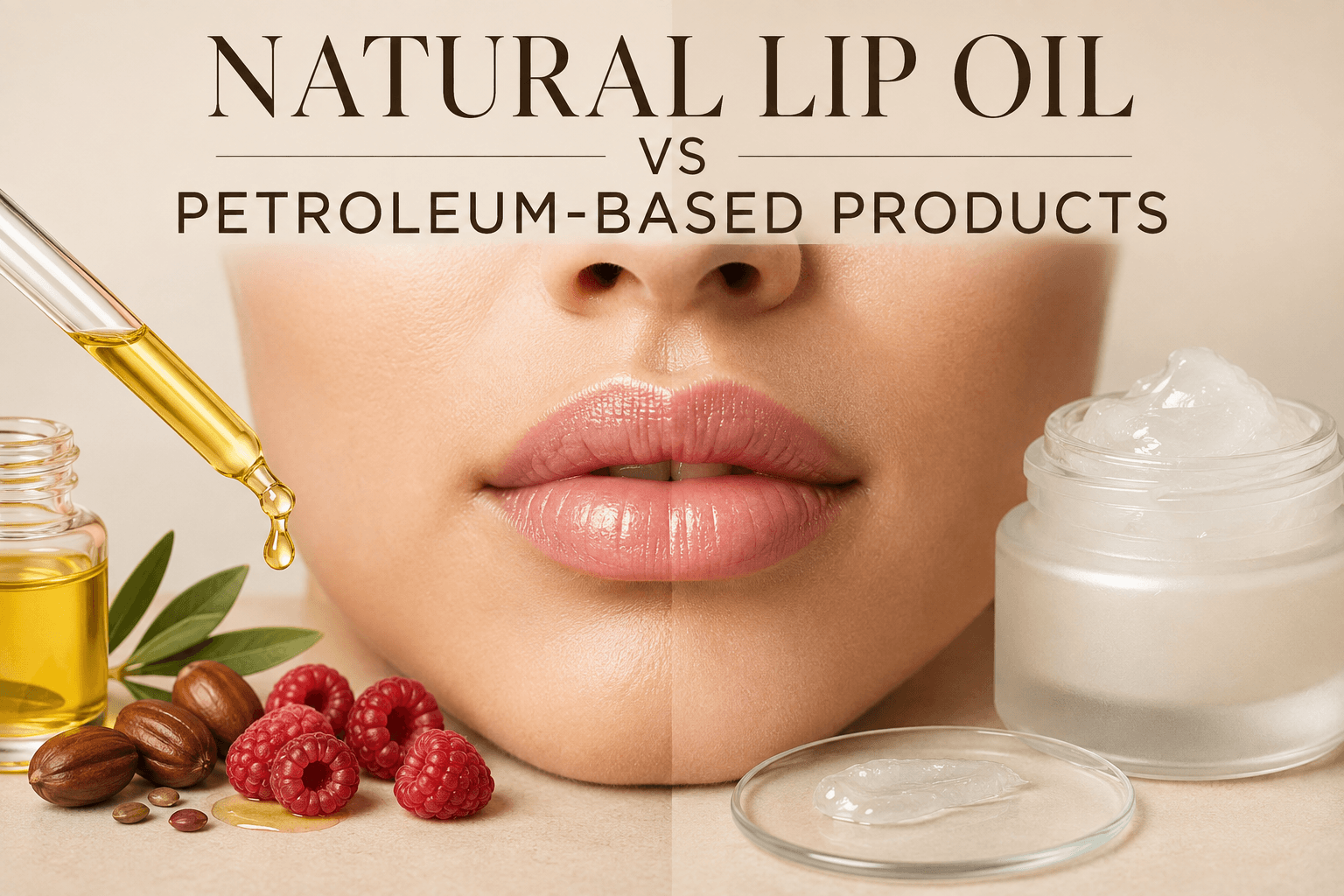
Introduction: Two Products With Different Purposes
Natural lip oils and petroleum-based lip products are often placed on opposite sides of the beauty debate. One is associated with botanical ingredients and a lightweight glossy finish. The other is known for creating a thick and lasting surface layer.
The real comparison is not about deciding which category is universally better. It is about understanding what each type of product does. Natural lip oil mainly provides emollient softness, slip, and shine, while petroleum-based lip care generally provides stronger moisture-sealing coverage.
Your ideal choice depends on the condition of your lips, the finish you enjoy, the weather, and how long you want the product to remain in place.
What Is Natural Lip Oil?
Natural lip oil is usually a fluid cosmetic formula made with botanical oils, oil-soluble emollients, or a combination of both. Common botanical ingredients include jojoba, castor, sunflower, sweet almond, and different seed oils.
These ingredients coat the surface of the lips and help rough areas feel softer and smoother. Their fluid consistency also produces the glossy appearance that makes lip oil a popular alternative to traditional lip gloss.
Natural lip oil can be a useful choice when:
- Your lips feel mildly dry
- You want visible shine
- You prefer a lightweight texture
- You want a comfortable layer over lip color
- You dislike the dense feel of traditional ointments
- You do not mind reapplying during the day
The complete formula matters more than the word “natural” on the packaging. Some lip oils focus mainly on shine, while others contain a more substantial blend of conditioning oils.
For a closer comparison between product formats, read COCOJOJO’s guide to lip oils versus lip balms.
What Are Petroleum-Based Lip Products?
Petroleum-based lip products commonly contain petrolatum, mineral oil, or related occlusive ingredients. These ingredients form a surface layer that helps reduce the rate at which water escapes from the lips.
Petrolatum does not add water to the lips. Instead, it helps preserve the moisture already present. Its dense consistency generally remains on the lips longer than a lightweight botanical oil.
Petroleum-based lip care may be useful when:
- Your lips feel very dry or tight
- You notice visible flaking
- You need longer-lasting coverage
- You want an overnight lip-care step
- You are exposed to cold, dry, or windy conditions
- You prefer a thick and cushiony texture
The American Academy of Dermatology explains that thick ointments such as white petroleum jelly can seal in water longer than waxes or oils.
The Main Difference: Softening Versus Sealing
Natural lip oils mainly work as emollients. They spread across the lip surface, improve slip, soften the feel of dry areas, and create a glossy finish.
Petroleum jelly works primarily as an occlusive. It creates a more substantial coating that slows moisture loss and protects the lip surface from dry environmental conditions.
Both categories can make the lips feel more comfortable. However, they reach that result through different textures and levels of coverage.
Lip oil is generally better for softness, shine, and lightweight daytime wear. Petroleum jelly is generally better for lasting coverage and a stronger moisture seal.
Texture and Appearance
A natural lip oil usually looks glossy and fluid. It can create a smooth, reflective finish without the heavy or sticky feeling associated with some lip glosses.
The exact texture depends on the selected oils. Jojoba and squalane can create a lightweight, silky feel. Castor oil provides a thicker texture and stronger gloss. Seed oils may add a distinctive color or natural aroma to the formula.
You can explore COCOJOJO Jojoba Golden Oil to learn more about the smooth texture and broader cosmetic uses of jojoba.
Petroleum-based products feel denser and more cushiony. They may leave a glossy surface, but the finish usually looks thicker than the fluid shine created by lip oil.
Which Option Lasts Longer?
Petroleum-based products generally remain on the lips longer because of their dense and highly occlusive texture. They are less likely to disappear quickly after application, making them useful before bed or during harsh weather.
Natural lip oils usually require more frequent reapplication. Their lighter consistency can wear away while eating, drinking, or speaking. This is not necessarily a weakness. Many people choose lip oil specifically because they prefer its lightweight feel and fresh-looking shine.
If long wear is your priority, petroleum-based lip care may be the better match. If comfort and gloss are more important, natural lip oil may be more enjoyable.
Is Natural Lip Oil Always Gentler?
Natural does not automatically mean irritation-free. Botanical lip oils may contain fragrance, flavor, essential oils, pigments, or naturally aromatic ingredients. These additions can feel uncomfortable when the lips are already sensitive or visibly chapped.
A simple fragrance-free petroleum jelly formula may be easier for some people to tolerate than a complicated botanical blend. The complete ingredient list is more important than whether the main ingredient comes from a plant or petroleum source.
Stop using any lip product that causes burning, stinging, swelling, or increased peeling. Persistent or recurring irritation should be assessed by a qualified dermatologist.
Which Option Is Better for Very Dry Lips?
A thick petroleum-based ointment is usually the more practical choice for very dry or visibly flaky lips because it creates a longer-lasting moisture seal.
A natural lip oil may make the lips feel softer and look glossier, but a lightweight formula may not provide enough lasting coverage during intense dryness.
This does not mean lip oil has no place in a dry-lip routine. It simply performs a different role. Lip oil can provide emollient comfort, while a thicker ointment can help keep that comfortable feeling in place for longer.
Can Natural Lip Oil and Petroleum Jelly Be Used Together?
Yes. The two product types can complement each other.
Begin with clean lips. Apply a lip-specific oil when you want softness and smooth slip. If additional coverage is needed, apply a thin layer of a non-irritating petroleum-based balm or ointment over it.
The oil contributes emollient softness, while the ointment creates a stronger moisture-sealing layer. Use a small amount of each product to avoid an excessively thick or messy coating.
For outdoor daytime use, choose a dedicated lip product labeled SPF 30 or higher and follow its reapplication directions.
Important Lip-Oil Safety Considerations
A cosmetic oil intended for the face, body, hair, scalp, or massage is not automatically suitable for the lips. Lip products require careful ingredient selection because small amounts may be transferred into the mouth during normal use.
Always follow the stated directions on the product. Do not apply essential oils, fragrance oils, or concentrated cosmetic ingredients directly to the lips unless they are part of a properly formulated lip product.
Choose products specifically labeled for lip application. If the formula causes discomfort, remove it and stop using it.
What Formulators Should Consider
Creating a well-balanced lip oil requires more than selecting an attractive botanical ingredient. The finished formula must provide the desired slip, gloss, stability, flavor compatibility, and packaging performance.
Oils can differ significantly in thickness, natural aroma, oxidation stability, color, and finish. A lightweight oil may spread easily but require frequent reapplication. A thicker oil may create better gloss but feel too heavy if used at an excessive level.
COCOJOJO’s Red Raspberry Seed Oil is presented as an ingredient suitable for balm and lip-product concepts. Formulators should still follow supplier directions and complete appropriate safety, compatibility, and stability evaluations before offering a finished product.
Frequently Asked Questions
Can Lip Oil Replace Lip Balm?
Lip oil can replace lip balm when your main goals are lightweight softness and shine. A thicker balm or ointment may be more suitable when the lips feel very dry or need longer-lasting coverage.
Does Petroleum Jelly Moisturize the Lips?
Petroleum jelly does not supply water. It forms a protective surface layer that helps reduce moisture loss from the lips.
Can Lip Oil Replace Lip Gloss?
Yes. Lip oil can provide visible shine with a smoother and often less sticky texture. The finish depends on the oils and other emollients used in the formula.
Can Petroleum Jelly Be Applied Over Lip Oil?
Yes. A thin layer of petroleum jelly can be applied over a lip-specific oil when additional moisture-sealing coverage is desired.
Is Every Botanical Oil Safe for Lip Use?
No. Only use products specifically intended and labeled for lip application. A natural ingredient is not automatically appropriate for the lips.
Which Product Is Better for Overnight Use?
A thick balm or petroleum-based ointment generally remains in place longer, making it more suitable for overnight use than a lightweight lip oil.
Conclusion: Choose According to Function
Natural lip oil and petroleum-based lip care perform different jobs. Lip oil provides emollient softness, comfortable slip, and an attractive glossy finish. Petroleum jelly creates a thicker layer that helps slow moisture loss and remains on the lips for longer.
Choose natural lip oil for lightweight daytime comfort and shine. Choose a petroleum-based product when your lips need a stronger moisture seal, especially overnight or during cold and dry weather. Use both when you want the sensory benefits of lip oil with the lasting coverage of an ointment.
COCOJOJO encourages shoppers and formulators to compare complete formulas, textures, and intended uses instead of choosing products through fear-based claims. Read the label carefully, select a formula designed for the lips, and let comfort and performance guide your decision.