
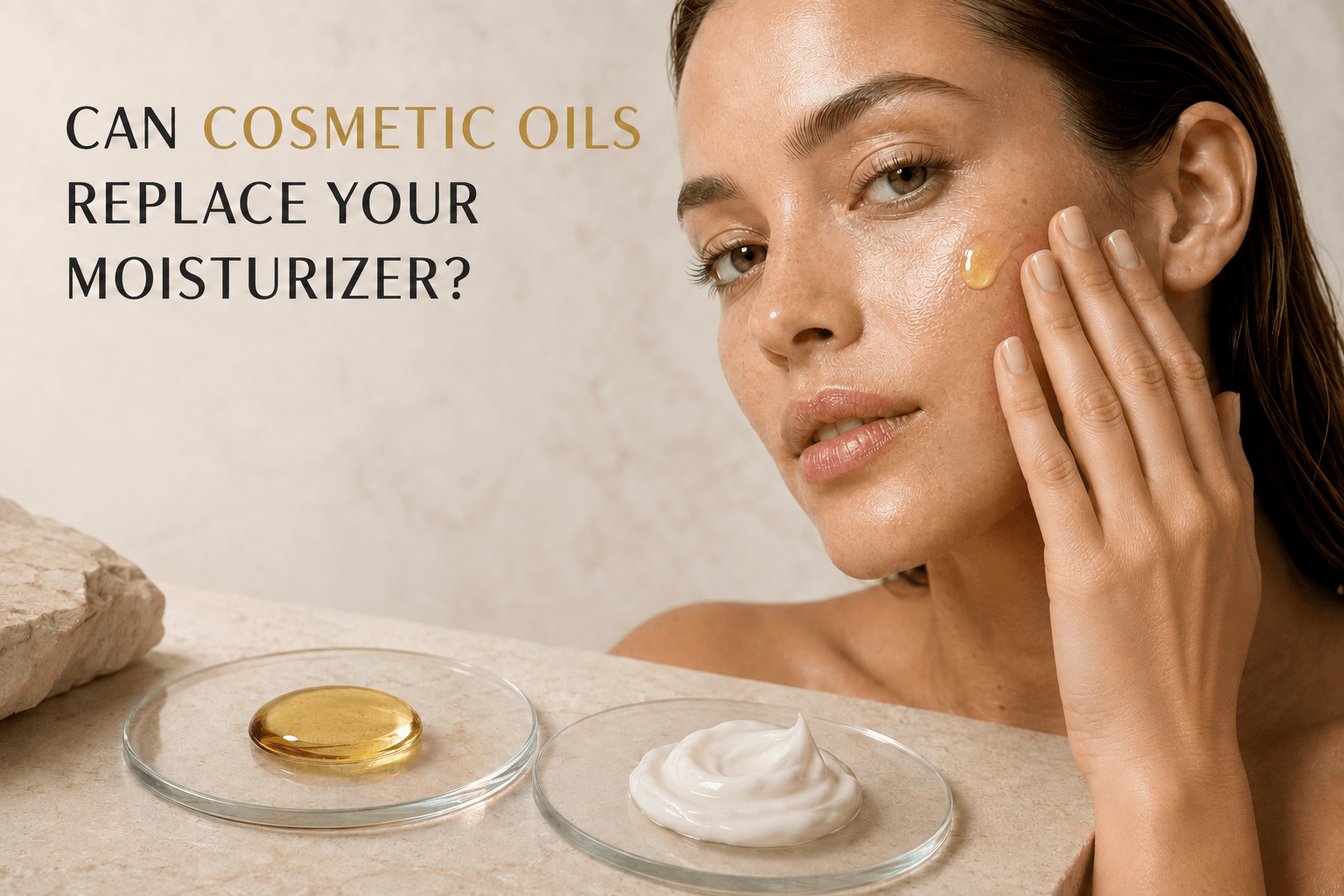
Introduction: Oil Feels Moisturizing, but Is It Enough?
A few drops of facial oil can transform rough-feeling skin into a softer, more luminous surface. That immediate comfort makes it tempting to remove moisturizer from your routine completely. However, feeling moisturized and receiving complete hydration support are not always the same thing.
The short answer is that cosmetic oil may feel sufficient for some people, particularly in warm or humid conditions. For many others, it works better as the final layer over a moisturizer. Understanding the difference begins with what these products actually contain.
What Does a Moisturizer Actually Do?
A well-formulated moisturizer commonly combines three types of ingredients. Humectants, such as glycerin, attract and bind water. Emollients smooth and soften the skin’s surface. Occlusive ingredients help slow the evaporation of water.
This combination allows a moisturizer to provide water-based hydration while helping the skin retain it. The American Academy of Dermatology explains that moisturizers can both add moisture and help prevent water from leaving the skin.
Creams, lotions, and gels perform these roles in different proportions. A gel may feel light and refreshing, while a richer cream can provide more comfort for dry or rough-feeling skin.
What Do Cosmetic Oils Do Differently?
Most single-ingredient cosmetic oils contain little or no water. They therefore cannot hydrate skin in the same way that a water-based moisturizer or hydrating serum can.
Instead, facial oils primarily act as emollient finishing layers. They soften rough areas, improve surface slip, and help reduce moisture loss after a hydrating product has been applied. This is why oil often performs best over slightly damp skin, serum, or moisturizer.
Texture differs considerably between oils. COCOJOJO Olive-Derived Squalane Oil provides a light, silky finish, while COCOJOJO Unrefined Argan Oil offers a richer, more conditioning feel.
Can Facial Oil Replace Moisturizer?
Sometimes, but not universally. Someone with normal or oilier skin may find that a lightweight oil provides enough softness, especially in a humid climate or after a water-based serum. Skin that already retains water comfortably may not require a rich cream every day.
Oil alone is less likely to be enough when skin feels tight, flaky, rough, or uncomfortable after cleansing. These signs suggest that the routine may need water-binding ingredients as well as an oil layer. Dry weather, indoor heating, frequent washing, and strong skincare products can increase this need.
If you apply oil and your skin still feels tight underneath the surface, the problem is probably not a lack of oil. Your skin may need a hydrating serum or moisturizer first.
The Best Way to Layer Moisturizer and Oil
For most routines, apply products from the lightest texture to the richest:
- Cleanse gently.
- Apply a hydrating toner or serum.
- Smooth on moisturizer.
- Press one to three drops of facial oil over dry areas.
- Apply broad-spectrum SPF 30 or higher during the day.
Oil generally belongs after moisturizer because it can help hold the preceding layers in place. Warm a small amount between clean fingertips and press it onto the skin rather than rubbing aggressively.
Do not mix cosmetic oil directly into sunscreen. This can affect how evenly the sunscreen spreads and forms its protective layer.
Choosing an Oil for Your Skin Type
Dry skin often benefits from applying a richer oil over moisturizer. Argan, rosehip, or camellia seed oil can provide a more cushioned finish when cheeks feel rough or tight.
Normal and combination skin may prefer a lighter option. COCOJOJO Jojoba Golden Oil offers smooth, versatile slip, while squalane provides a particularly light after-feel. Apply oil mainly to dry areas instead of automatically covering the entire face.
Oily or congestion-prone skin should begin with one drop and introduce only one new product at a time. No cosmetic oil is universally suitable for every complexion.
Sensitive skin usually benefits from simplicity. Choose a fragrance-free formula, patch test it on a limited area, and stop use if irritation or persistent discomfort develops.
Undiluted essential oils are not substitutes for facial moisturizers. They are concentrated aromatic ingredients and should not be treated like carrier oils.
When an Oil-Only Routine May Work
A simple oil-only finishing step may suit you if your skin feels comfortable after cleansing, your climate is humid, and you already use a water-based hydrating product. It can also work when you want minimal extra softness without the weight of a cream.
Try applying one drop to slightly damp skin for several evenings. If your face remains comfortable without tightness or flaking, that may be enough for your current needs.
Skin needs can change with the season. A routine that works during summer may require moisturizer underneath the same oil during winter.
When You Should Keep Your Moisturizer
Keep moisturizer in your routine if your skin regularly feels tight, flaky, or uncomfortable. You may also need both products when using potentially drying formulas or spending long periods in air-conditioned or heated environments.
Persistent redness, cracking, itching, swelling, or discomfort should not be managed by repeatedly adding more cosmetic oil. Stop the new product and seek guidance from a qualified dermatologist.
How COCOJOJO Helps You Find the Right Texture
COCOJOJO offers individual cosmetic oils with different weights, finishes, and botanical sources. This makes it easier to compare a lightweight oil with a richer alternative without immediately combining several unfamiliar ingredients.
Explore the COCOJOJO Natural Oil Collection or read the guide to the Best Oils for Combination Skin before choosing. Start with one oil, use only a small amount, and let your skin’s response guide the routine.
Frequently Asked Questions
Should Face Oil Go Before or After Moisturizer?
Apply face oil after moisturizer in most routines. This allows the moisturizer to supply water-based ingredients before the oil creates a softer finishing layer.
How Many Drops of Facial Oil Should I Use?
Begin with one drop for the face. Dry skin may prefer two or three drops, but applying more does not automatically provide better hydration.
Can I Mix Facial Oil With Moisturizer?
You can blend one drop with moisturizer in your palm if the formulas combine evenly. Layering them separately usually provides better control over the amount and placement of oil.
Can I Use Cosmetic Oil Every Day?
Yes, if the formula agrees with your skin. Begin two or three evenings per week, patch test first, and increase frequency only if your skin remains comfortable.
Conclusion: Hydrate First, Seal Thoughtfully
Cosmetic oils can make skin feel remarkably soft, but they do not always replace every function of a complete moisturizer. Oil mainly conditions the surface and helps retain hydration, while moisturizer can also provide water and water-binding ingredients.
For most people, the most dependable approach is simple: hydrate first and apply oil last. Choose a texture suited to your skin, begin with one drop, and adjust your routine as your skin and environment change.