
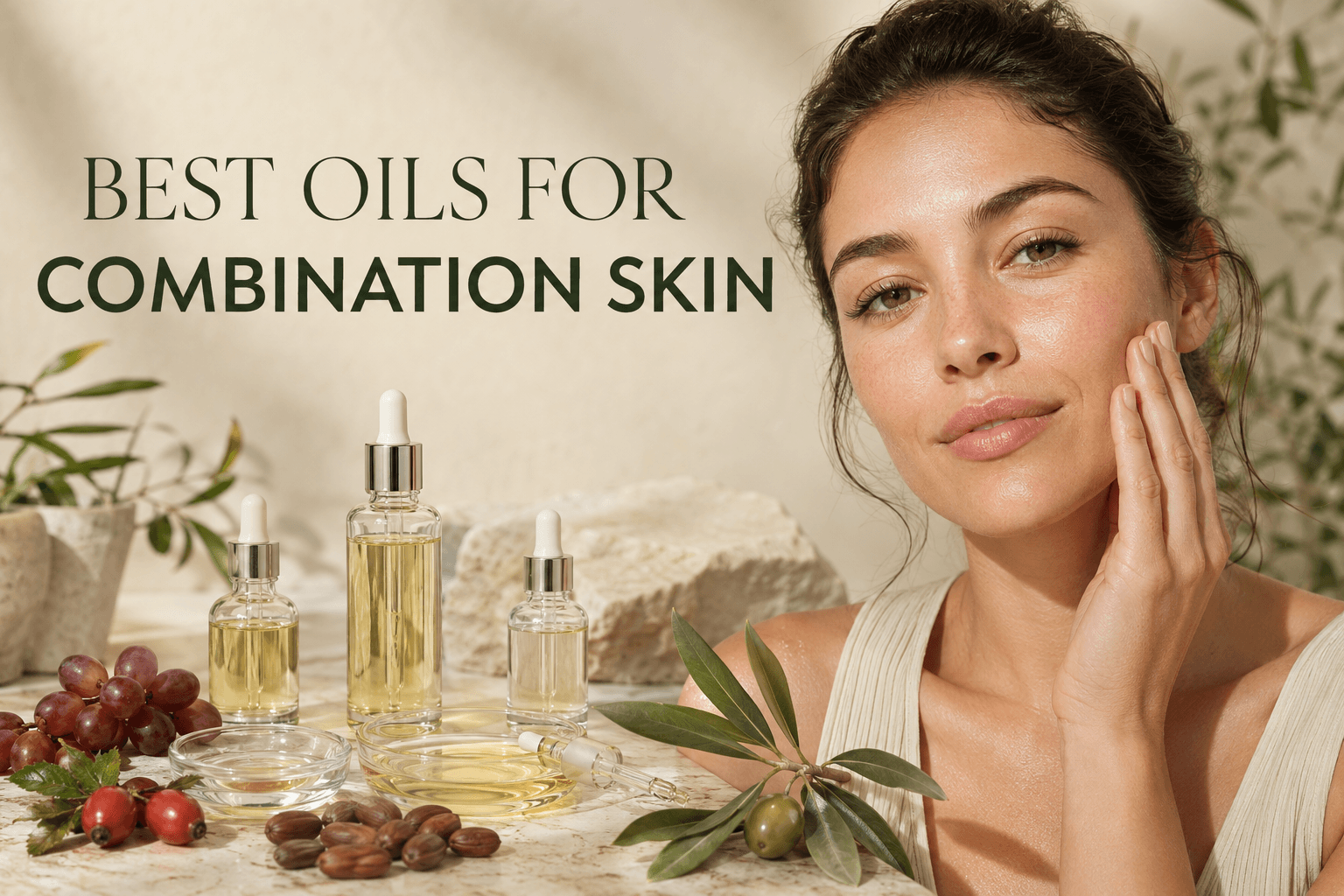
Introduction: One Face, Two Different Needs
Combination skin can feel like two skin types sharing the same face. Your forehead, nose, and chin may become shiny, while your cheeks feel tight or rough. Applying one rich product everywhere can leave the T-zone greasy. Avoiding moisture completely can make the drier areas feel even less comfortable.
The solution is not to eliminate oil. It is to choose a lightweight facial oil and apply it according to what each area needs. The right oil can soften dry-feeling areas and help reduce moisture loss without creating an unnecessarily heavy finish.
Face oil does not add water to the skin, so it usually works best alongside a hydrating serum or moisturizer. If you are unsure where to begin, COCOJOJO’s guide to choosing an oil for your skin type offers a helpful starting point.
What Makes an Oil Suitable for Combination Skin?
A good oil for combination skin should spread easily, absorb comfortably, and allow precise application. Instead of covering the entire face with several drops, you should be able to use one drop across the face or press a small amount only onto dry areas.
Texture matters more than marketing terms. Look for a simple formula with a light or dry-touch finish. If your skin is easily irritated, avoid added fragrance and introduce only one new oil at a time.
Remember that no oil is universally suitable for everyone. Skin response can change with weather, hormones, cleansing habits, and the other products in your routine.
1. Jojoba Oil: The Best Starting Point
Jojoba is technically a liquid wax rather than a traditional plant oil. Its smooth texture and comfortable finish make it one of the easiest choices for someone trying facial oil for the first time.
COCOJOJO Jojoba Golden Oil can be used across the face in a very small amount. Start with one drop, warm it between your fingertips, and press it lightly over your moisturizer. If your T-zone already feels comfortable, focus the application on your cheeks and around the jawline.
Jojoba is especially useful when your skin feels oily in some areas but temporarily dry in others. It provides softness without requiring a thick or complicated routine.
Best for: Beginners, changing seasonal needs, dry cheeks, and combination skin that dislikes heavy products.
2. Squalane: The Lightest Everyday Option
Squalane has a clear, silky texture and a low-odor finish. It is highly stable and generally feels lighter than many traditional botanical oils. This makes it a strong option for people who want moisture support without a noticeable oily layer.
COCOJOJO Olive-Derived Squalane Oil is made with plant-derived squalane. Although it is derived from olives, squalane is not the same ingredient as olive oil. It has a distinctly lighter and more refined skin feel.
Apply one drop over moisturizer in the evening. It can also be pressed onto dry areas before makeup, provided you allow it to settle before applying foundation or sunscreen.
Best for: Oilier T-zones, humid weather, daytime routines, makeup preparation, and people who dislike a greasy finish.
3. Grapeseed Oil: A Light, Dry-Touch Choice
Grapeseed oil is valued for its thin consistency and fast-spreading feel. COCOJOJO Unrefined Grapeseed Oil is a practical option when richer oils feel too noticeable on the skin.
Because unrefined botanical oils can change when repeatedly exposed to heat, air, and light, close the bottle tightly and store it in a cool, dark place. Begin with one drop two or three evenings per week before deciding whether your skin needs more frequent use.
Best for: A shiny T-zone, warm weather, layering under moisturizer, and people who prefer a lighter after-feel.
4. Argan Oil: Extra Comfort for Dry Cheeks
Argan oil has a more conditioning texture than squalane or grapeseed oil. For combination skin, it is often more useful as a targeted oil than as a full-face product.
Place a small amount of COCOJOJO Unrefined Argan Oil on the cheeks, around the mouth, or anywhere that feels dry. Keep it away from areas that already feel sufficiently moisturized.
A 60-day human study found that topical argan oil improved measured skin hydration in postmenopausal participants. However, this limited study does not mean argan oil will produce identical results for every person or skin type. Read the published study on PubMed.
Best for: Dry cheeks, cool weather, nighttime use, and combination skin that becomes noticeably drier during winter.
5. Rosehip Oil: An Evening Option for Dull-Looking Areas
Rosehip oil has a distinctive natural color, aroma, and richer botanical character. It can be added to an evening routine when the cheeks look dull or feel less supple.
Start by mixing one drop of COCOJOJO Unrefined Rosehip Oil with one or two drops of squalane. Apply the blend only where needed. This creates a lighter finish than covering the face with rosehip oil alone.
Unrefined rosehip oil should be protected from direct light and heat. Its natural color may also transfer if too much is applied immediately before bed.
Best for: Evening routines, dry or dull-looking cheeks, and people who enjoy naturally colored botanical oils.
How to Choose Between These Oils
Choose jojoba when you want a versatile first oil that can adapt to different areas. Choose squalane when finish and simplicity are your priorities. Grapeseed oil works well when you prefer a thin, dry-touch texture.
Argan and rosehip are better reserved for areas that need extra conditioning. You do not need to choose a single oil for your entire face. Combination skin often responds better when the T-zone and cheeks are treated according to their individual needs.
If your forehead becomes shiny but your cheeks remain tight, try squalane across the face and argan only on the cheeks. If nearly every oil feels heavy, begin with one drop of squalane or grapeseed oil two evenings per week.
A Simple Morning Routine
Begin with a gentle cleanser or rinse your face with lukewarm water. Follow with a lightweight hydrating serum and moisturizer.
If your cheeks still feel dry, press a very small amount of squalane or jojoba over those areas. Finish with broad-spectrum sunscreen rated SPF 30 or higher. Allow each layer to settle before applying the next product.
Using several drops of oil beneath sunscreen can affect how evenly the sunscreen sits, so keep morning oil application minimal.
A Simple Evening Routine
Cleanse the skin thoroughly to remove sunscreen, makeup, and daily buildup. Apply any water-based serum, followed by your regular moisturizer.
Warm one drop of oil between clean fingertips and press it gently onto the face. Concentrate on the cheeks and other dry areas. Use what remains on your fingertips across the T-zone instead of applying another full drop.
Start two or three evenings per week. You can adjust the frequency based on how your skin feels. The COCOJOJO guide on how often to use face oil explains how climate, texture, and skin type can affect frequency.
Common Combination-Skin Oil Mistakes
The most common mistake is applying too much. More oil does not automatically mean more moisture. One carefully placed drop can be more comfortable than four or five drops covering every part of the face.
Another mistake is treating the T-zone and cheeks identically. Combination skin benefits from zone-based application, which means richer oils can be reserved for dry areas.
Do not apply undiluted essential oils as facial moisturizers. They are concentrated aromatic ingredients and are different from carrier oils such as jojoba, grapeseed, argan, and rosehip.
Finally, natural does not mean reaction-free. Test a small amount on one limited area before using it across your face. Stop using the product if you experience persistent irritation, swelling, or discomfort.
How COCOJOJO Simplifies Your Oil Routine
COCOJOJO offers natural oils with clear distinctions in source, texture, and processing. This makes it easier to compare a lightweight option such as squalane with richer botanical choices such as argan or rosehip.
Explore the COCOJOJO natural oil collection to find an oil that fits your preferred texture and routine. Rather than layering several products immediately, begin with one carefully chosen oil and learn how your skin responds.
Frequently Asked Questions
Can combination skin use facial oil every day?
Yes, but daily use is not necessary for everyone. Begin two or three evenings per week and increase only if your skin remains comfortable.
Does face oil replace moisturizer?
Usually not. A moisturizer can supply water-binding ingredients and emollients, while facial oil mainly helps soften the skin and reduce moisture loss. Apply oil after moisturizer when your skin feels dehydrated.
Which facial oil feels the least greasy?
Squalane generally has the lightest, silkiest finish among these options. Grapeseed oil is another good choice for people who prefer a dry-touch feel.
Can I use different oils on different areas?
Yes. This is one of the most useful approaches for combination skin. Use squalane or grapeseed oil on oilier areas and a small amount of argan or rosehip on dry cheeks.
Should I use coconut oil on combination facial skin?
Coconut oil has a richer, heavier texture. It may be more suitable for the body or very dry areas than for a combination complexion that becomes easily congested.
How long should I test a facial oil?
Texture and finish can be judged immediately, but give your skin around two to three weeks before evaluating overall compatibility. Introduce only one new product during that period.
Conclusion: Begin With One Drop
The best oil for combination skin is not necessarily the richest or most popular option. It is the oil that gives dry areas enough comfort without overwhelming the rest of your face.
Begin with jojoba or squalane, use only one drop, and apply it according to each zone. Add grapeseed oil when you want a drier finish, or reserve argan and rosehip for areas needing extra softness. A simple, targeted routine will usually serve combination skin better than layering several oils at once.