
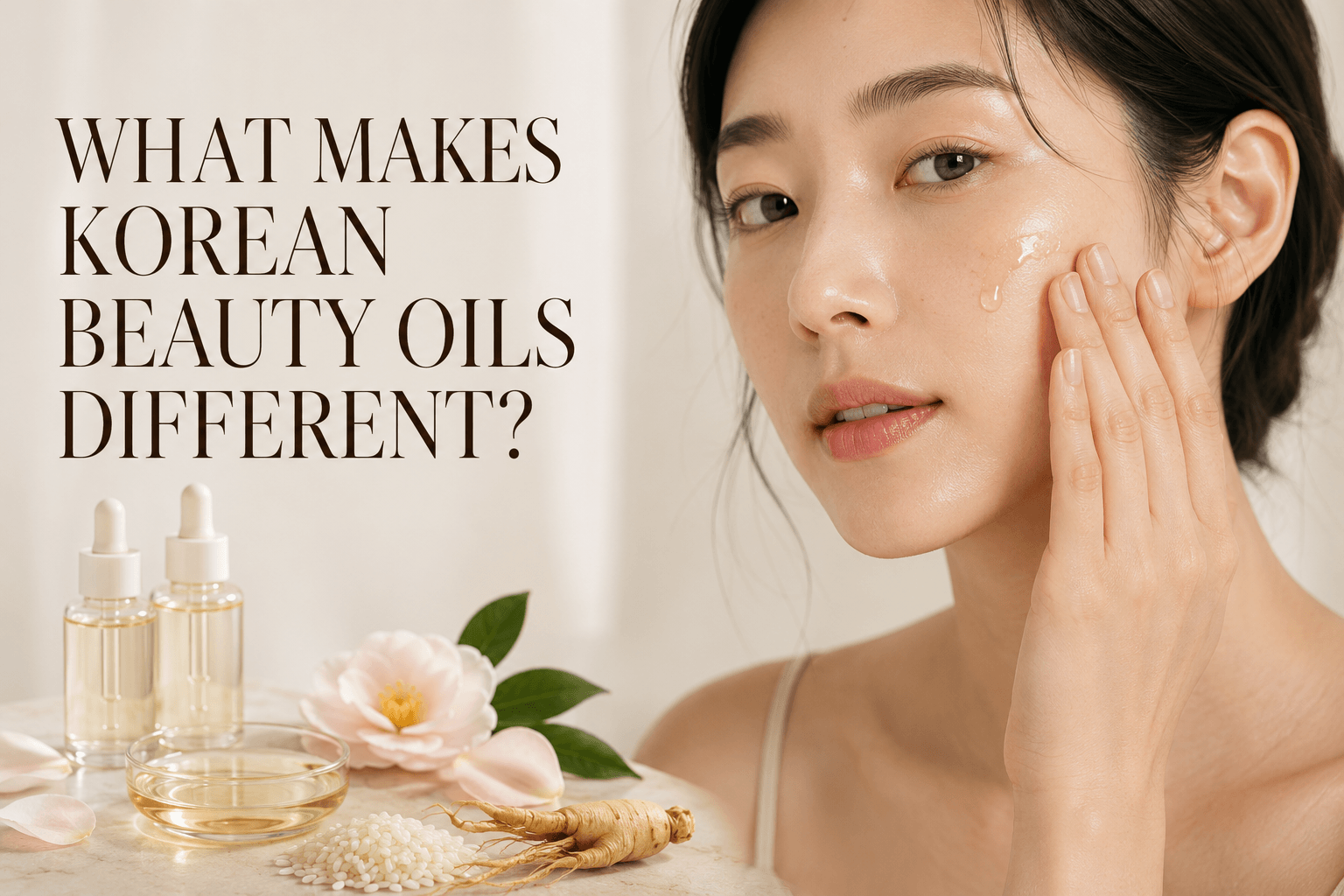
What Makes Korean Beauty Oils Different? The Real Secret Is How They Are Used
Introduction: It Is Not Just About the Ingredient
A bottle labeled “Korean beauty oil” may contain familiar ingredients such as camellia, jojoba, squalane, rice bran, or rosehip oil. So why can the experience feel different?
The answer is rarely one exotic ingredient. Korean beauty oils are distinguished more by formulation philosophy, texture, and application technique. They are commonly designed to complement lightweight hydrating layers, create a smooth finish, and help the skin retain the moisture applied underneath.
This approach turns facial oil from a heavy final product into a flexible part of a carefully balanced routine.
The Honest Answer: Korean Beauty Is Not an Oil Type
There is no single ingredient or formula that automatically makes an oil Korean beauty. The term describes a wider skincare approach influenced by Korean routines, product textures, cosmetic research, and beauty preferences.
A Korean skincare oil is not automatically better simply because it was made in Korea. Its suitability still depends on its complete ingredient list, texture, fragrance, packaging, and compatibility with your skin.
The real distinction is how the oil is designed to feel and how it fits into the routine. A well-formulated K-beauty oil often prioritizes light application, comfortable layering, and a fresh-looking finish instead of a thick or persistently greasy coating.
Difference 1: Lightweight Texture Matters
Korean skincare is known for building hydration through thin, comfortable layers. For that reason, many oils and oil-serum hybrids are formulated to spread easily and settle quickly.
Some formulas combine botanical oils with lightweight emollients or squalane to create a silky texture. Others use carefully balanced oil blends so that only one or two drops are needed.
You can recreate this sensory approach with a light option such as COCOJOJO Squalane Oil. Its smooth slip makes it suitable for people who want softness without an overly rich finish.
Texture remains personal. Dry skin may enjoy a more cushioned oil, while combination skin may prefer a thinner oil applied only to the cheeks.
Difference 2: Hydration Comes Before Oil
One of the most important K-beauty principles is hydrating first and sealing last.
Facial oil does not supply water to dehydrated skin. Instead, it acts as an emollient layer that softens the surface and helps reduce the loss of moisture from products applied underneath.
A Korean beauty-inspired routine may begin with a hydrating toner or essence, followed by a serum and moisturizer. A small amount of facial oil can then be pressed over those layers.
This is why the result can feel dewy rather than greasy. The glow comes from balanced water and oil layers, not from coating dry skin with a large quantity of oil.
For more guidance, read COCOJOJO’s face oil frequency guide.
Difference 3: Cleansing Oils Are Designed to Rinse Away
A Korean cleansing oil and a leave-on facial oil are not the same product.
Cleansing oils usually contain oils plus emulsifying ingredients. When water is added, the formula becomes milky and rinses away with makeup, sunscreen, and surface buildup. This is commonly used as the first part of double cleansing.
A single-ingredient carrier oil may not emulsify or rinse away completely. It should not automatically replace a properly formulated cleansing oil.
After an oil cleanser, a mild water-based cleanser can be used if your skin needs a second cleansing step. The objective is comfortable, effective cleansing without vigorous rubbing or a tight after-feel.
Difference 4: Traditional Botanicals Meet Modern Formulation
Korean skincare frequently draws inspiration from botanical ingredients with a long history of cosmetic or cultural use. Oils derived from camellia, rice bran, perilla, and ginseng seeds may appear alongside more globally familiar ingredients.
However, not every Korean oil contains these botanicals, and traditional use alone does not confirm how well a finished product will perform.
A peer-reviewed overview of bioactive ingredients in Korean cosmetics describes how traditional botanical sources are increasingly being studied through modern cosmetic research. This combination of heritage and formulation science is an important part of K-beauty innovation.
For a silky botanical option, COCOJOJO Camellia Seed Oil offers a smooth, cushioned feel that suits Korean beauty-inspired facial, body, and hair rituals.
Difference 5: Oils Often Appear in Hybrid Formats
Korean beauty does not always present oil as a traditional dropper product. Oil components may appear in:
- Oil essences
- Dual-phase serums
- Emulsifying cleansing oils
- Facial mists
- Oil-in-water emulsions
- Lightweight sleeping treatments
These formats can provide the softness associated with oil while preserving a lighter application experience. A hybrid formula may also allow oil-soluble and water-soluble ingredients to appear in the same routine.
This format variety is one reason K-beauty oils can feel different from heavier, single-step facial oils.
Difference 6: The Goal Is Consistent Comfort
Korean beauty is often associated with elaborate routines, but more steps are not always better. The useful lesson is consistency, not product quantity.
A thoughtfully chosen oil should make the skin feel comfortable, soft, and flexible. It should not require a thick layer or leave the face feeling coated for hours.
For many people, one to three drops are enough. Combination skin may need oil only on dry areas. Oily skin may prefer one drop of COCOJOJO Jojoba Oil - Unrefined Certified Organic, which is technically a liquid wax with a lightweight, easily spreadable texture.
A Simple Korean Beauty-Inspired Oil Routine
Begin with a routine that your skin can tolerate consistently:
- Cleanse gently. Use an emulsifying cleansing oil first if you wear water-resistant sunscreen or makeup.
- Apply a hydrating layer. Use a toner, essence, or water-based serum suited to your skin.
- Follow with moisturizer. Choose a texture appropriate for your climate and skin type.
- Press in one to three drops of oil. Warm the oil between clean fingertips and press it gently over the moisturizer.
- Use sunscreen during the day. Apply broad-spectrum SPF 30 or higher as the final skincare step. Do not mix facial oil directly into sunscreen.
If you want to compare textures before choosing, explore COCOJOJO’s guide to the top oils for a Korean beauty-inspired glow.
How to Choose the Right Oil
Ignore the trend name for a moment and study the actual product.
Check the complete ingredient list, recommended use, fragrance content, extraction method, and packaging. Consider whether you prefer a dry, silky finish or a richer, more cushioned feel.
Sensitive or reactive skin may respond better to a simple fragrance-free option. Introduce only one new oil at a time and patch test before wider use. Stop using the product if persistent redness, burning, itching, swelling, or discomfort occurs.
Skin type also matters. The COCOJOJO oil selection guide can help you compare jojoba, rosehip, argan, coconut, and other textures.
How COCOJOJO Fits the K-Beauty Approach
The K-beauty oil philosophy works best when you can choose a texture that matches your routine rather than forcing every skin type to use the same formula.
COCOJOJO offers clearly identified oils that make it easier to compare lightweight squalane, versatile jojoba, silky camellia, and richer botanical options. This allows you to build a customized routine one product at a time.
Explore the COCOJOJO retail collection to find an oil that complements your moisturizer, climate, and preferred finish.
Frequently Asked Questions
Are Korean beauty oils better than other facial oils?
Not automatically. Their appeal often comes from lightweight textures, elegant formulations, and the way they are incorporated into layered routines. The ingredient list and your skin’s response matter more than the country named on the package.
Can oily skin use a Korean beauty oil?
Yes, some oily or combination skin types can tolerate a small amount of lightweight oil. Begin with one drop and apply it only where needed. Stop if you notice persistent congestion or discomfort.
Should facial oil go before or after moisturizer?
Facial oil is generally applied after moisturizer as a finishing layer. A product with a hybrid water-and-oil formula may have different directions, so always check its label.
Do I need a 10-step Korean skincare routine?
No. A gentle cleanser, hydrating product, moisturizer, suitable oil, and daytime sunscreen can provide a practical routine without unnecessary complexity.
Conclusion: The Difference Is in the Experience
What makes Korean beauty oils different is not one ingredient or a complicated ritual. It is the emphasis on light textures, layered hydration, adaptable formulas, and careful application.
Use oil as a supportive finishing step rather than expecting it to perform every skincare function. Begin with a small amount, select the texture according to your skin, and observe how it feels over time.
The most valuable K-beauty lesson is simple: thoughtful layers and consistent care matter more than the number of bottles on your shelf.