
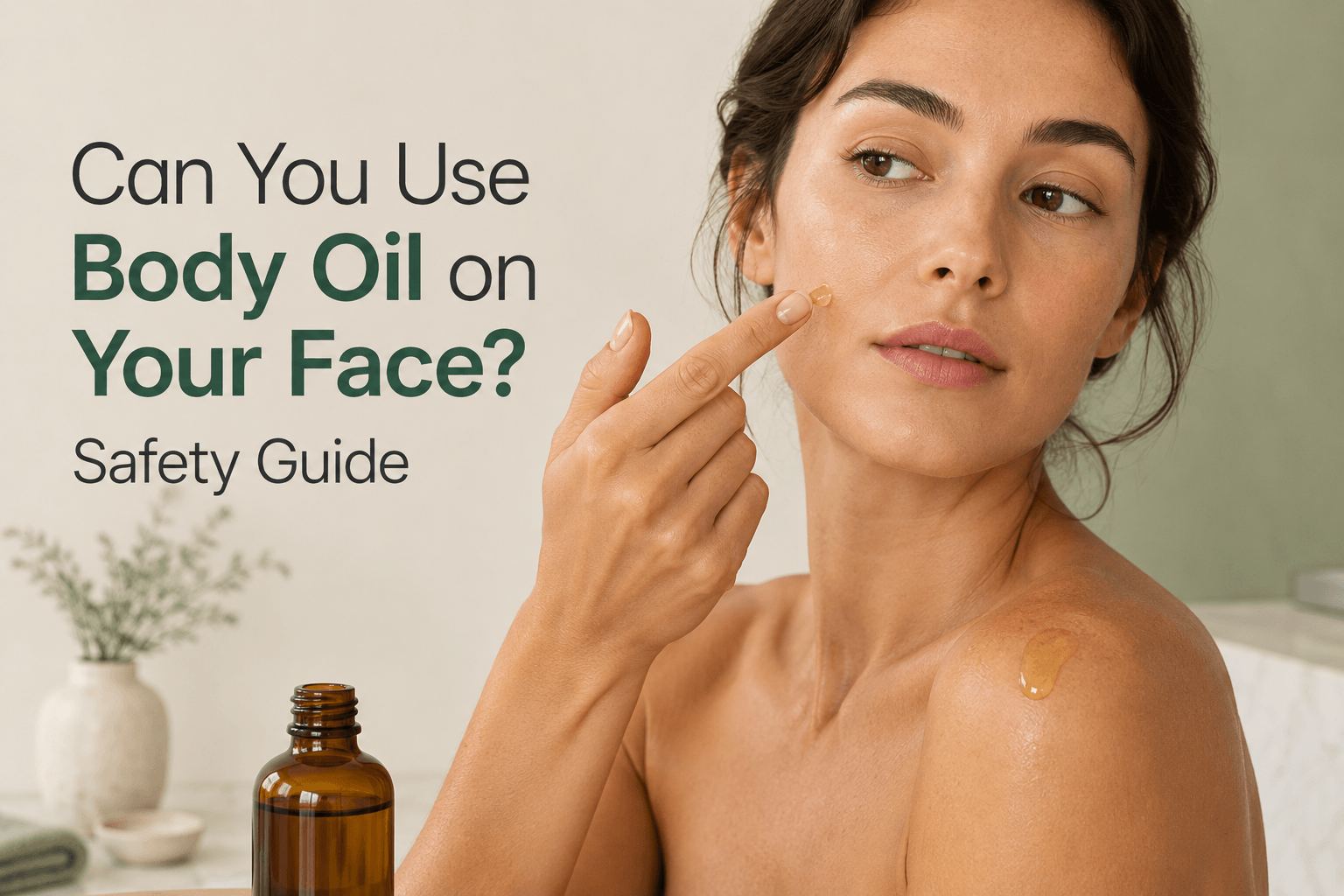
Introduction: One Oil, Two Very Different Uses
That bottle of body oil leaves your arms and legs feeling wonderfully soft, so using it on your face may seem like an easy shortcut. But before you smooth it across your cheeks, look beyond the word “oil.”
Body oils and facial oils are not automatically interchangeable. Some simple, fragrance-free oils can work beautifully for both areas, while other body formulas may feel too heavy or contain ingredients that are unsuitable for delicate facial skin.
The real question is not simply, “Can you use body oil on your face?” It is, “Does this particular formula belong on your face?”
Can You Use Body Oil on Your Face? The Short Answer
Yes, you can sometimes use body oil on your face, provided the formula is suitable for facial application and agrees with your skin.
A single-ingredient carrier oil may be sold for the face, body, hair, and nails because its simple composition allows for several cosmetic uses. A finished body oil, however, may contain added fragrance, essential oils, shimmer, color, or a richer blend designed specifically for arms, legs, and massage.
Never assume that an oil is facially suitable merely because it is natural. Check the complete ingredient list, product directions, and warnings first.
Body Oil vs. Face Oil: What Is the Difference?
The most important difference is usually the formula, not the name on the front of the bottle.
Facial oils are commonly designed for smaller application amounts, careful layering, and the needs of facial skin. Body oils may prioritize slip, fragrance, massage time, or a glossy finish across a larger area. That can make some body formulas feel uncomfortable or overly rich on the face.
Your face may also respond differently from your body. An oil that feels perfect on dry legs could contribute to a greasy sensation or new clogged-looking bumps around the forehead, nose, or chin.
If you are uncertain which oil matches your skin, CocoJojo’s guide to choosing an oil for your skin type offers a useful starting point.
Read the Label Before Applying Body Oil to Your Face
A short ingredient list is usually easier to evaluate. Look for a product that identifies the botanical oil clearly and states that it can be used on facial skin.
A potential multipurpose oil should ideally have:
- A simple, clearly disclosed ingredient list
- No added fragrance or parfum
- No shimmer, dyes, or decorative pigments
- No warming or cooling ingredients
- Directions that permit facial application
- A texture appropriate for your skin type
Avoid putting a body oil on your face if the label says “body use only,” if you cannot identify its ingredients, or if it contains something that has irritated your skin before.
Added fragrance and essential oils deserve particular attention. Even naturally derived fragrance ingredients can cause discomfort for some people, especially when used close to the eyes or on reactive skin.
Which Oils May Be Better Multipurpose Choices?
Simple carrier oils are generally easier to assess than complex scented body-oil blends. However, no oil is guaranteed to suit every person.
For a lighter finish, you may consider options such as CocoJojo Jojoba Golden Oil or olive-derived Squalane Oil. Someone with dry-feeling skin may prefer a slightly richer oil, such as CocoJojo Unrefined Argan Oil.
These examples should still be introduced gradually. Product quality cannot replace individual skin compatibility, and even a simple botanical oil can cause a reaction in someone sensitive to that ingredient.
Consider Your Skin Type
Dry skin: Oil can help soften the skin and reduce moisture loss. However, oil does not supply water to the skin. Apply it over a moisturizer or slightly damp skin instead of expecting it to replace every moisturizing step.
Oily or breakout-prone skin: Choose a lightweight formula intended for facial use. Start with one drop and watch for persistent congestion, bumps, or increased discomfort.
Sensitive skin: Prioritize fragrance-free products with short ingredient lists. Avoid experimenting when your skin is already irritated, peeling, or reacting to another product.
Combination skin: Apply the oil only where needed. Dry cheeks may welcome a small amount even when the forehead and nose do not.
Always Patch Test First
A patch test cannot predict every possible breakout, but it can help reveal visible irritation before you apply a product across your entire face.
The American Academy of Dermatology’s patch-testing guidance recommends applying a product to a small test area twice daily for seven to ten days. Use the same amount and thickness you would normally apply.
Choose an inconspicuous area such as the inner arm or bend of the elbow. If you notice redness, itching, swelling, or discomfort, wash the area and discontinue use.
How to Use a Suitable Oil on Your Face
Once the oil passes your patch test and its directions permit facial use, introduce it slowly:
- Cleanse your face gently and pat away excess water.
- Apply your regular water-based serum or moisturizer.
- Warm one or two drops of oil between clean fingertips.
- Press the oil lightly onto the skin instead of applying a thick layer.
- Avoid the eyelids, lash line, and any broken or irritated areas.
- Begin with two or three nighttime applications per week.
- Increase or reduce the amount according to how your skin responds.
Avoid introducing several unfamiliar products during the same week. If irritation develops, using one new product at a time makes it easier to identify the cause.
When Should You Stop Using It?
Stop applying the oil if you develop persistent burning, itching, swelling, a rash, or a noticeable increase in clogged-looking bumps. Gently cleanse the area and return to a simple routine using products you already tolerate.
Seek advice from a qualified dermatologist if a reaction is severe, spreads, affects the eyes, or does not improve. Skincare should never require you to tolerate ongoing discomfort.
How COCOJOJO Helps You Choose More Carefully
COCOJOJO provides clearly identified carrier oils with information about their botanical names, extraction methods, refinement, textures, and suggested cosmetic uses. This makes it easier to compare options instead of treating every body oil as if it were the same.
When shopping for a multipurpose oil, focus on ingredient transparency and suitability for your skin. A thoughtfully selected oil can become a versatile part of your face, body, and hair routine, but only when its formula and directions support those uses.
Frequently Asked Questions
Can body oil replace facial moisturizer?
Not always. Oils mainly soften the skin and help seal in moisture. If your skin feels dehydrated, apply a water-based moisturizer first and use a small amount of oil as the final step.
Can I use scented body oil on my face?
It is generally better to choose a fragrance-free product formulated or labeled for facial use. Fragranced body oils may be more likely to cause discomfort on sensitive facial skin.
How much body oil should I use on my face?
Start with one drop. A thin, even layer is enough for most facial applications. Applying more oil does not necessarily provide more benefit.
Can I use body oil on my face every day?
Only after the product passes a patch test and your skin tolerates gradual use. Start a few nights per week before considering daily application.
Conclusion: Let the Formula Decide
So, can you use body oil on your face? Sometimes, but the bottle must earn its place in your facial routine.
Choose a simple formula, confirm that facial use is permitted, avoid unnecessary fragrance, patch test carefully, and begin with only one or two drops. When you select an oil according to its ingredients rather than its marketing name, you give your skin a safer and more comfortable chance to respond well.