
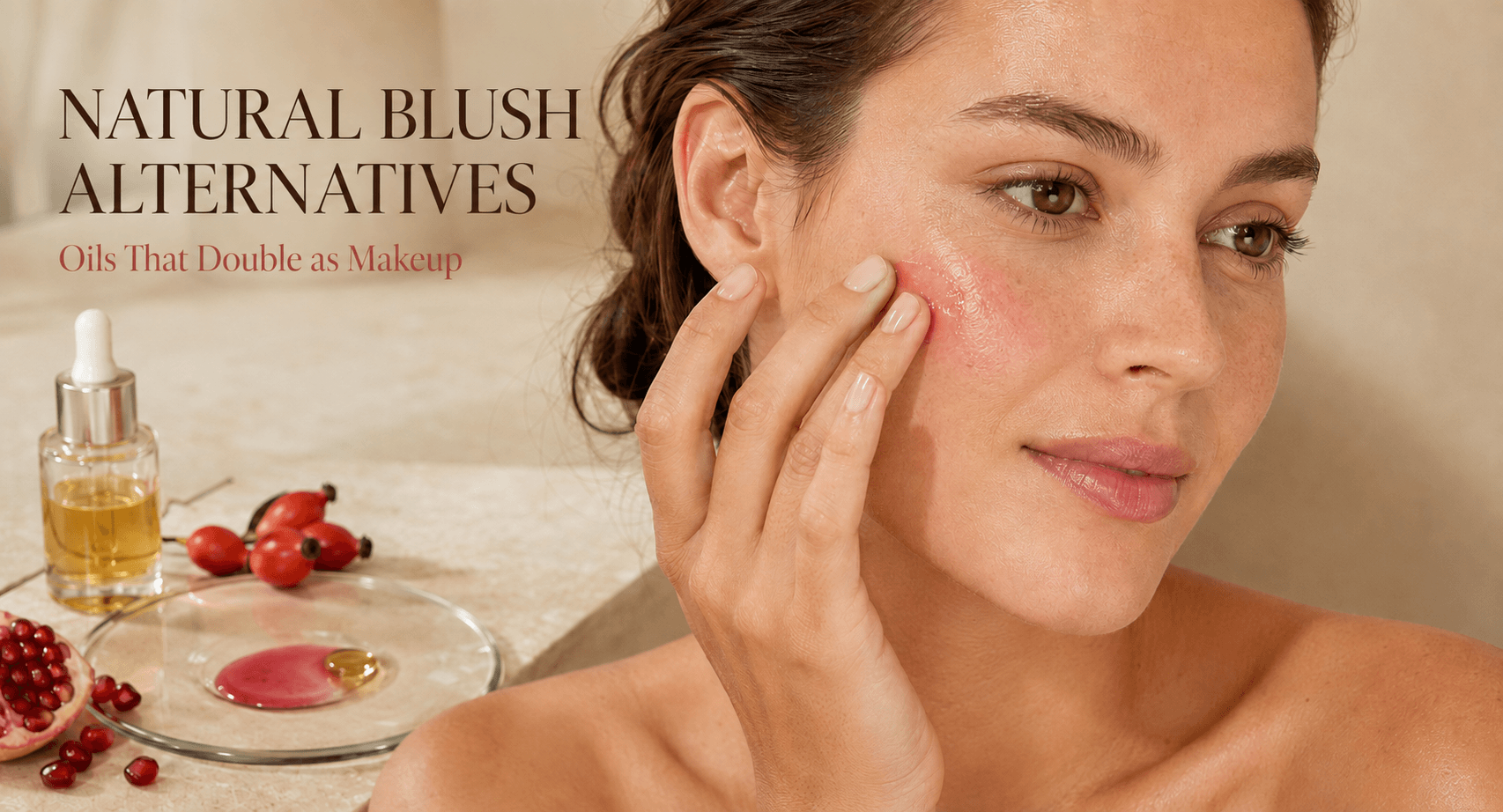
Introduction: Your Blush May Be Missing One Tiny Drop
Blush gives the face color, but the finish often determines whether it looks naturally flushed or visibly made up. When powder emphasizes dry areas or cream blush feels difficult to blend, a carefully chosen facial oil can help create a softer, more seamless result.
The secret is understanding what oil can and cannot do. Plain oil does not provide the stable rosy pigment of blush. Instead, it can act as a makeup base, mixing medium, or dewy topper, helping a finished cheek color look smoother and more luminous.
That distinction turns facial oil into a genuinely useful makeup companion without pretending that every naturally colored ingredient belongs on your cheeks.
Can Facial Oil Really Replace Blush?
A facial oil can replace some of the slip, softness, and glow associated with cream blush, but it cannot reliably replace blush pigment. Most cosmetic oils range from nearly clear to amber or golden. Even naturally colorful oils do not provide a predictable pink, berry, or coral shade across different skin tones.
A better interpretation of natural blush alternatives is to pair a skin-compatible facial oil with a finished cosmetic cheek color. The pigment creates the flush, while the oil adjusts its texture and radiance.
This matters for safety as well as appearance. The FDA explains that color additives used in makeup must be approved for their intended cosmetic use. Fresh fruit juice, food coloring, craft pigment, and decorative mica should not automatically be treated as face-safe makeup ingredients simply because they appear natural.
Jojoba Oil: The Controlled, Silky Mixer
Jojoba Golden Oil is a versatile choice when you want controlled slip without turning the cheeks excessively glossy. Its fluid texture makes it useful for softening a cream or liquid blush that sets too quickly.
Place a small dot of blush on a clean palette. Touch the tip of a clean brush to the jojoba oil, then blend that trace amount into the color. You need much less than a full drop. Apply the mixture in thin layers and build only where more color is needed.
Jojoba is especially useful for creating a soft satin cheek finish. If you are still deciding which facial texture suits your complexion, CocoJojo’s guide to choosing the best oil for your skin type provides a helpful starting point.
Squalane Oil: The Lightweight Dewy Topper
When you want glow without a noticeably oily finish, Olive-Derived Squalane Oil offers a lighter-feeling option. Rather than mixing it through the entire blush, apply your cheek color first. Then press the smallest trace of squalane onto the upper cheekbone.
This technique adds a subtle light-reflecting finish while allowing the blush shade to remain clear. Keep the oil above the fullest part of the cheek instead of spreading it across the entire face. Concentrated placement helps the skin look fresh rather than shiny.
For more ideas on combining facial oils with a luminous beauty routine, explore CocoJojo’s guide to natural oils for a glass-like skin finish.
Rosehip Oil: Warm Radiance Beneath Cheek Color
Unrefined Rosehip Oil naturally has an amber or orange-gold character. On some complexions, a tiny amount can add visible warmth beneath coral, terracotta, or warm rose blush. Its natural color varies, however, so it should be treated as a radiance layer rather than a controlled blush pigment.
Press a very small amount into moisturized skin and allow it to settle before applying makeup. Add blush afterward using a sponge or fingertips. This creates warmth from beneath the color instead of leaving a wet layer on top.
If you are comparing its finish with a more neutral oil, the CocoJojo guide to rosehip oil versus jojoba oil can help clarify the differences.
Argan Oil: Extra Cushion for Dry-Feeling Cheeks
Dry-feeling skin can make blush catch around texture instead of blending evenly. Unrefined Argan Oil offers a richer, more cushioned feel for this situation.
Press a trace amount onto the cheeks during skin preparation, allow it to absorb, and then continue with sunscreen and makeup. Do not mix oil into sunscreen, since doing so can interfere with the product’s intended application.
Argan oil works best here as a preparation step, not as a heavy finishing glaze. Using too much can shorten makeup wear or cause complexion products to separate.
Three Ways to Create the Oil-Blush Effect
1. Prepare the Cheeks
Apply a minimal amount of your chosen facial oil during skin preparation. Allow it to settle before applying sunscreen. Let the sunscreen form an even layer before moving on to makeup. Facial oil does not replace sun protection.
2. Mix on a Clean Palette
Combine a dot of finished cream or liquid blush with only a trace of oil. Mix enough for one application and discard anything left over. Never add oil directly to the original blush container because this can change the formula, wear, and cleanliness of the product.
3. Add a Targeted Glow
Apply blush normally, then tap the smallest trace of oil onto the upper cheekbone. Avoid spreading it over areas where makeup usually creases or fades. This method delivers the most noticeable dewy cheek effect with the least product.
Choose the Finish Before Choosing the Oil
The blush shade should still come from a properly formulated cosmetic color. The oil determines how that shade sits on the skin.
Choose jojoba for balanced slip, squalane for a lighter glow, rosehip for warm-looking radiance, or argan for a more cushioned finish on dry-feeling cheeks. Skin type, climate, foundation formula, and personal preference can all change the result.
Before applying a new oil across the face, patch test it on a small area. Stop using it if irritation occurs, avoid broken skin, and keep cheek products away from the immediate eye area unless they are specifically intended for that use.
What Not to Use as Homemade Blush
Avoid applying fresh beet juice, crushed berries, food coloring, cinnamon, essential oils, craft mica, or art pigments as cheek color. These materials may stain unevenly, irritate the skin, introduce contamination, or lack approval for cosmetic use.
Raw plant mixtures that contain water also require proper preservation. Adding oil does not make a homemade water-based mixture shelf stable. For the safest and most consistent result, combine a cosmetic facial oil with a finished blush instead of improvising with kitchen ingredients.
Conclusion: Let the Oil Shape the Finish
The most convincing natural blush is rarely about using more color. It is about making that color look as though it belongs to the skin.
Facial oils can soften edges, add controlled radiance, and help cheek makeup feel more adaptable. They are not substitutes for approved cosmetic pigment, but the right oil can transform how blush blends and reflects light.
CocoJojo’s selection of natural cosmetic oils makes it easier to choose a texture that complements your complexion and preferred makeup finish. Start with the smallest possible amount, keep the application clean, and let your natural skin texture remain part of the look.