
Introduction
A beautiful oil bottle should do more than look good on your shelf. It should protect its contents, dispense them easily and leave you with a practical plan for the empty packaging.
That is the starting point for sustainable packaging for oil products. Whether you use a few drops of facial oil or larger amounts for body care, the goal is to balance product protection with less unnecessary material and waste.
Protect the Oil Inside
Packaging has an essential job before it ever reaches a recycling bin: helping preserve the product. Exposure to light, air and heat can affect natural oils, so bottle choice and storage deserve attention.
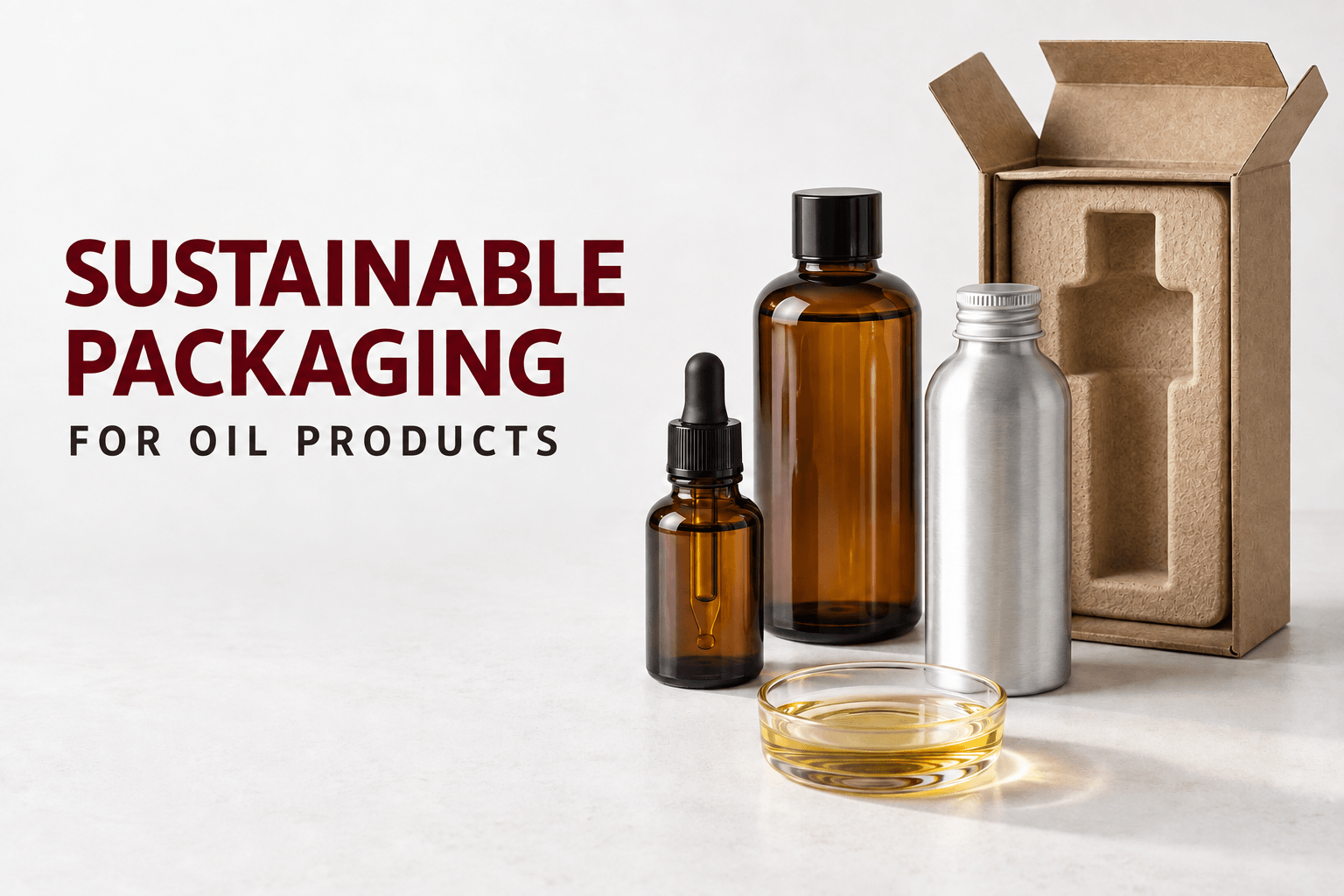
Amber glass can reduce light exposure, while suitable opaque containers offer another protective option. A secure closure helps prevent leaks, and a well-designed dispenser makes it easier to control how much oil you use.
Keep oils in their original packaging and follow their storage instructions. For a broader look at protection, dispensing and bottle selection, explore the COCOJOJO guide to choosing skincare packaging.
Compare Glass, Plastic and Aluminum Thoughtfully
Glass offers a useful barrier and a premium feel. Its weight and potential for breakage also matter when considering transport and protective packing.
Plastic offers lightweight, shatter-resistant options. Post-consumer recycled plastic incorporates material recovered after previous use, but the finished bottle still needs to be suitable for the particular oil. Recycled content and recyclability are separate features.
Aluminum is lightweight and blocks light. Its internal coating, closure and compatibility with the formula need to be checked before use.
For an oil brand, the practical question is which complete package protects the formula with an appropriate amount of material. Compare the bottle, dispenser, shipping protection and likely disposal together.
Make Refills and Larger Sizes Work for Your Routine
Refillable oil packaging can reduce demand for new bottles when the original container is actually reused. The refill package, cleaning requirements and number of repeat uses all affect the result.
Choose systems designed for refilling and follow the manufacturer's instructions. An attractive empty bottle is not automatically suitable for repeated cosmetic use.
Larger sizes also deserve a little planning. If you use an oil regularly, a larger container may reduce packaging per use. If you only apply a few drops occasionally, choose an amount you can finish within the recommended period.
Keep Outer Packaging Simple and Protective
A carefully fitted carton or paper insert can secure a bottle without creating an oversized unboxing experience. The useful question is whether each layer serves a purpose, such as preventing breakage, containing a leak or carrying essential product information.
For brands, test simpler packaging before removing protective components. A damaged bottle wastes both the container and the oil inside.
This approach fits into the wider decisions explored in COCOJOJO's article on sustainability in skincare brands.
Make Recycling Practical
Check the bottle and its accessories separately. A dropper can combine a glass pipette, plastic collar and rubber bulb, so it should not automatically go into the same recycling stream as the bottle. Follow local instructions for emptying, cleaning and handling closures.
The recycling symbol alone does not confirm local acceptance. Glass collection also varies by location. The EPA recommends checking with your local provider and considering the full life cycle when comparing packaging materials. Its recycling guidance explains these distinctions.
Specific material information and clear disposal directions make packaging easier to assess than a broad “eco-friendly” claim.
Choose Your Next Oil With COCOJOJO
Thoughtful purchasing begins with a product you will use consistently. Explore COCOJOJO Jojoba Golden Oil, Unrefined or COCOJOJO Rosehip Oil, Unrefined, review the available sizes and choose a quantity that fits your routine.
Use each product as directed, store it carefully and make a plan for the packaging when it is empty. These everyday decisions help you get more from your purchase.
Conclusion: Make Every Bottle Count
The most useful approach to sustainable oil packaging combines product protection, sensible quantities, minimal unnecessary layers and realistic reuse or recycling options. Start with your next bottle: choose thoughtfully, care for the oil inside and follow through when you reach the last drop.