
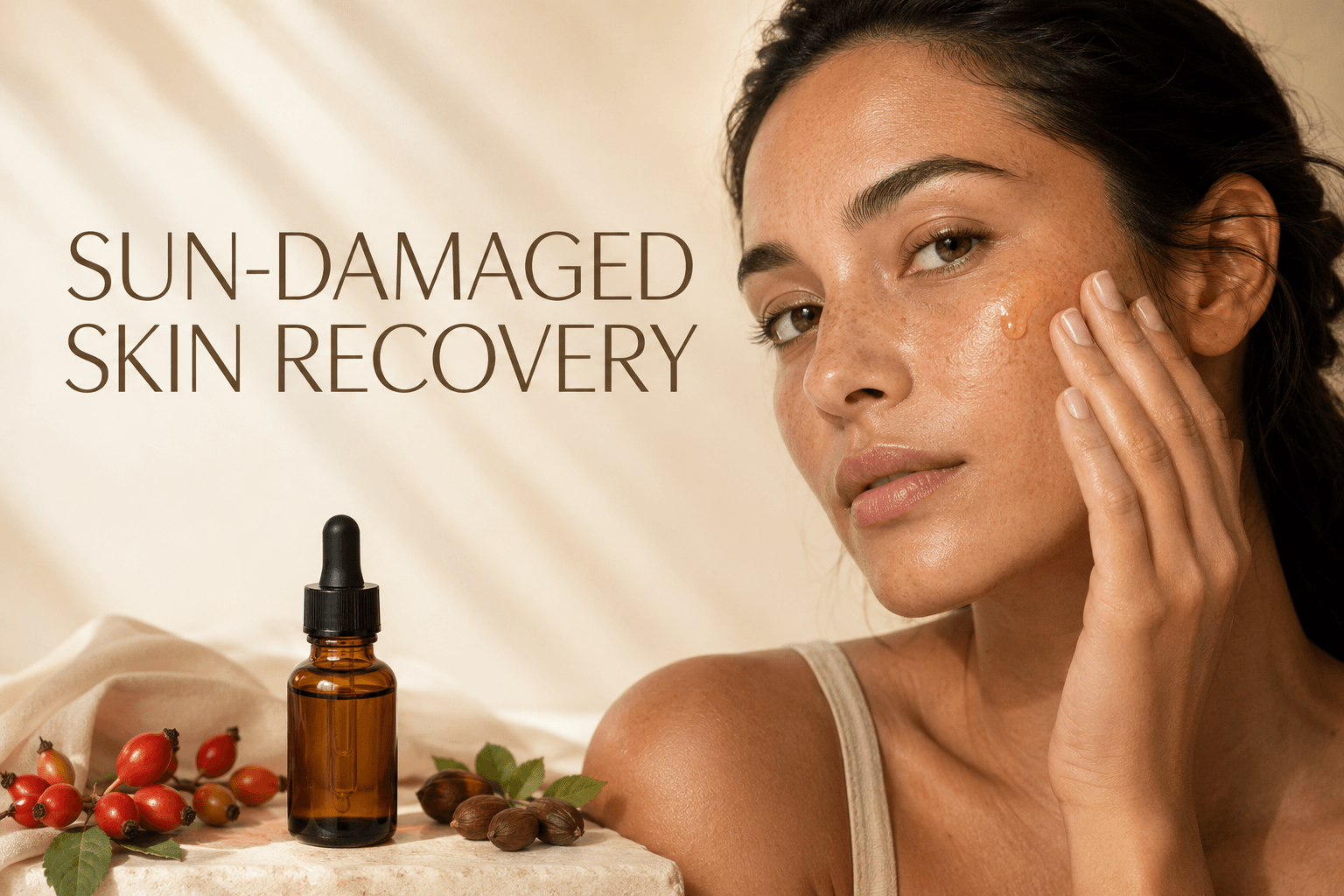
Introduction: Can Natural Oils Repair Sun-Damaged Skin?
Too much sun can leave skin feeling dry, tight, rough, or unusually sensitive. With repeated exposure, you may also notice uneven-looking tone, dark spots, fine lines, and a loss of softness.
Natural oils can support sun-damaged skin recovery by replenishing surface lipids, reducing moisture loss, and improving comfort. However, they cannot reverse UV-related cellular damage, remove established sunspots, or replace sunscreen and professional treatment.
The smartest approach combines gentle skincare, consistent sun protection, and a facial oil selected for your skin type.
First, Is It Sun Damage or an Active Sunburn?
Long-term sun damage and a fresh sunburn need different care. If your skin is hot, painful, swollen, blistered, or intensely red, facial oil should not be your first treatment.
Follow the American Academy of Dermatology’s sunburn guidance, which recommends getting out of the sun, cooling the skin, applying an aloe vera or soy moisturizer, and drinking additional water. Do not break blisters or scrub peeling skin.
Wait until the heat and acute tenderness have settled before introducing a new facial oil. Seek medical advice for extensive blistering, severe pain, fever, confusion, dehydration, or symptoms that continue to worsen.
What Natural Oils Can Actually Do
Facial oils primarily work as emollients. They fill spaces between dry surface cells and help slow moisture loss, making rough skin feel softer and more flexible.
A well-chosen oil may help:
- Reduce dry, tight, or flaky skin
- Support a more comfortable skin barrier
- Make dehydration lines appear less noticeable
- Improve surface smoothness
- Restore a healthier-looking glow
These are valuable cosmetic benefits, but realistic expectations matter. Oils do not function as sunscreen, prescription retinoids, pigment treatments, or medical care.
Rosehip Oil for Dull, Uneven-Looking Skin
Rosehip oil is a popular choice when sun-stressed skin appears dry, rough, or dull. Its naturally occurring fatty acids help condition the skin and support a smoother, more radiant appearance.
COCOJOJO Rosehip Oil Unrefined has a richer botanical character that suits evening routines. Apply one or two drops after moisturizer, concentrating on areas that feel dry or look lackluster.
Rosehip oil should not be described as natural retinol. It can support softness and visible radiance, but it does not provide the predictable corrective action of a formulated retinoid.
Squalane for Lightweight Barrier Support
Squalane is ideal for skin that feels dehydrated but becomes uncomfortable under heavier oils. It is a lightweight, stable emollient that spreads easily and leaves a smooth finish with minimal greasiness.
COCOJOJO Olive-Derived Squalane Oil can be layered over a hydrating serum or moisturizer. Its simple texture makes it especially useful for normal, combination, sensitive, or oil-prone skin.
Choose squalane when your priority is dependable moisture support rather than a rich botanical feel.
Argan Oil for Very Dry, Rough Skin
Argan oil offers a more cushioned finish for skin that feels persistently dry or less supple after sun exposure. It helps soften rough areas and seal moisture into the skin, making it particularly suitable for dry cheeks, the neck, and the upper chest.
Start with one drop of COCOJOJO Certified Organic Unrefined Argan Oil. Increase the amount only if your skin still feels dry. Using too much may feel heavy on combination or acne-prone complexions.
Jojoba Oil for Combination Skin
Jojoba is technically a liquid wax with a light, conditioning texture. It is a practical option when some areas feel dry while the forehead, nose, or chin becomes oily.
COCOJOJO Golden Jojoba Oil Unrefined helps soften the skin without the dense finish of richer oils. Begin with one drop and press it gently over the areas that need additional comfort.
If you are unsure which texture suits you, COCOJOJO’s guide to choosing an oil for your skin type offers a simple comparison.
The Best Routine for Sun-Stressed Skin
In the evening, wash with a gentle cleanser and avoid aggressive scrubs. Apply a fragrance-free hydrating serum or moisturizer while the skin is slightly damp. Finish with one to three drops of your chosen oil to help seal in moisture.
In the morning, use a gentle moisturizer followed by a broad-spectrum, water-resistant sunscreen with SPF 30 or higher. Sunscreen should remain the final skincare step. Never mix facial oil directly into sunscreen because this can interfere with even application.
Reapply sunscreen approximately every two hours when outdoors and after swimming or sweating. Shade, protective clothing, a wide-brimmed hat, and sunglasses provide additional protection.
Common Mistakes That Slow Visible Recovery
Applying essential oils directly to sun-stressed skin is one of the biggest mistakes. Essential oils are concentrated fragrant ingredients, not substitutes for carrier oils, and may cause irritation when used undiluted.
Over-exfoliating is another problem. Strong acids, rough scrubs, and multiple active products can make already sensitive skin feel worse. Introduce new products gradually and stop using anything that causes persistent burning, itching, or redness.
Do not expect oil to fade a suspicious or changing spot. A dermatologist should examine any new, changing, bleeding, painful, or non-healing skin lesion.
How to Choose the Right Oil
Choose rosehip when your skin feels dull or rough and you prefer a botanical evening oil. Select squalane for lightweight daily moisture, argan for very dry skin, or jojoba for a balanced finish on combination skin.
Patch test each new oil on a small area before applying it widely. Introduce only one product at a time so you can identify irritation or congestion accurately.
Store botanical oils away from direct sunlight and heat. Replace an oil if its color, texture, or scent changes noticeably. For a broader comparison of realistic benefits, read COCOJOJO’s guide to anti-aging oils and mature skin.
Conclusion: Support Recovery Without Believing the Hype
The best natural oils for sun-damaged skin do not promise to erase the past. They support what compromised skin often needs most: moisture, softness, comfort, and a smoother-looking surface.
Rosehip supports radiance, squalane provides lightweight conditioning, argan cushions very dry skin, and jojoba offers balanced moisture. COCOJOJO’s individual oils make it easier to select the texture that matches your skin instead of relying on exaggerated claims.
Use a few drops consistently, protect your skin every morning, and allow time for visible improvement. When natural oils support a gentle routine rather than replace proven sun protection, they can become a valuable part of healthier-looking skin care.