
Introduction
A beautiful cream can contain carefully chosen oils, botanical extracts and an elegant texture, yet still need one essential ingredient system: effective preservation.
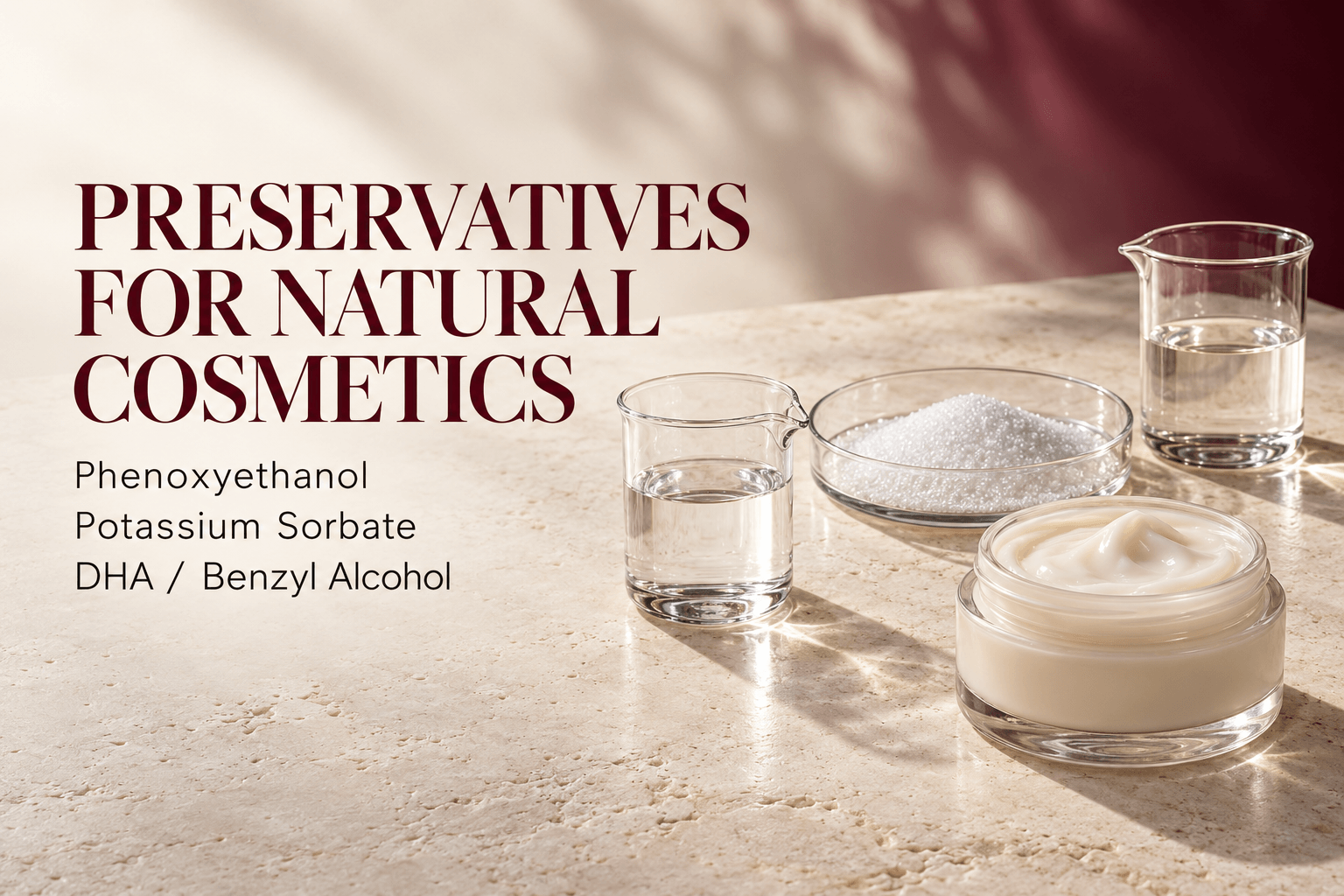
When comparing preservatives for natural cosmetics, phenoxyethanol, potassium sorbate and dehydroacetic acid with benzyl alcohol each bring different strengths. The right choice depends on your formula’s pH, ingredients, packaging and microbial risks.
Here is how to understand the differences before choosing a preservative for your next skincare project.
Why Natural Cosmetics Need Effective Preservation
Water-containing products such as lotions, gels and facial toners can support microbial growth when their preservation is inadequate. Contamination can enter through raw materials, manufacturing equipment, packaging or everyday handling.
The FDA’s guidance on microbiological safety in cosmetics identifies ineffective preservation as one route through which cosmetic products can become contaminated. Careful manufacturing and suitable packaging work alongside the preservative system to protect the product.
For formulators, the goal is broad-spectrum protection, meaning effective coverage against relevant bacteria, yeast and mold in the finished formula.
Phenoxyethanol: Flexible pH Compatibility and Strong Bacterial Coverage
Phenoxyethanol is widely used in skincare preservation because its activity is less dependent on acidic conditions than organic acid preservatives. Manufacturer guidance for cosmetic-grade phenoxyethanol documents compatibility across a broad formulation pH range.
Its particular strength is bacterial protection. Mold coverage can require additional support, which helps explain why phenoxyethanol is frequently combined with ingredients such as ethylhexylglycerin or other compatible components. A bottle of pure phenoxyethanol and a prepared phenoxyethanol blend have different specifications.
The European Commission’s Scientific Committee on Consumer Safety concluded that phenoxyethanol is safe as a cosmetic preservative at a maximum concentration of 1.0%, based on the information it assessed. That conclusion does not establish the effective dose for every formulation.
For projects considering this ingredient, COCOJOJO Phenoxyethanol Preservative Liquid provides a sourcing option. Confirm the supplied material’s technical instructions and whether the complete formula needs complementary fungal protection.
Potassium Sorbate: Useful Fungal Protection in Acidic Formulas
Potassium sorbate is the potassium salt of sorbic acid. Its preservation performance depends strongly on the finished product’s pH because acidic conditions favor the more active sorbic acid form.
Its main strengths are protection against yeast and mold. Supplier guidance commonly places its best performance in acidic formulations, typically below approximately pH 5.5. Its bacterial coverage is more limited, so potassium sorbate alone should not be assumed to provide a complete preservation system for a water-based cosmetic.
This makes it a useful candidate within a properly designed preservation system for compatible acidic products. Simply adding it to a lotion without checking pH and bacterial protection can leave important gaps.
COCOJOJO Potassium Sorbate is an option to consider when developing such a system. Its suitability should be assessed alongside the formula’s other ingredients and the protection they provide together.
DHA/Benzyl Alcohol: A Combined Preservation Approach
In this comparison, DHA means dehydroacetic acid. Combined with benzyl alcohol, it forms a preservation system designed to provide broader microbial coverage than either ingredient may deliver independently.
Working pH still matters. Published manufacturer guidance for one established dehydroacetic acid and benzyl alcohol blend specifies a pH range of 2 to 7, with efficacy potentially compromised above pH 7. The operating range and recommended dose for the exact material you purchase must be confirmed separately.
These blends can be candidates for compatible creams, lotions and other personal care formulas. Their suitability also depends on processing conditions, ingredient compatibility and performance in the finished product.
COCOJOJO’s Dehydroacetic Acid, Benzyl Alcohol and Water Preservative Blend offers this type of combined approach. Review its current technical documentation before setting your formulation parameters.
Which Options Fit Natural Cosmetic Standards?
“Natural” claims and certification requirements deserve a separate check from preservation performance.
The COSMOS standard permits certain preservatives, including sorbic acid and its salts, benzyl alcohol, and dehydroacetic acid and its salts. Phenoxyethanol is outside its permitted preservative list. These allowances also include specified non-natural ingredients, so acceptance under a natural cosmetic standard does not automatically make a preservative organic.
If certification is part of your product plan, confirm the exact ingredient grade and complete formula with the relevant certification body. An ingredient’s acceptance alone does not certify the finished product.
How to Choose Between the Three
Start with your formula’s requirements:
- Consider a phenoxyethanol-based system when broad pH compatibility and strong bacterial coverage are priorities. Assess whether complementary fungal protection is needed.
- Consider potassium sorbate as part of a system when your formula is sufficiently acidic and needs yeast and mold protection alongside suitable bacterial coverage.
- Consider a DHA/benzyl alcohol blend when you want a combined preservation approach that fits the formula’s pH and your intended natural cosmetic standard.
These are starting points for development. The finished formula determines whether the choice works.
How Much Preservative Should You Use?
Follow the current instructions for the exact ingredient or blend, calculating the addition by weight of the total finished batch. Pure ingredients and commercial blends contain different proportions of active components, so replacing one with another at the same percentage can change performance.
Check the supplier’s recommended concentration, working pH, addition temperature and compatibility information. Confirm applicable restrictions for the markets and product categories involved.
A recommended use range helps you design a trial formula. Testing establishes whether that trial delivers adequate protection.
Why Preservative Testing Matters
A preservative that performs well in one cream may behave differently in another. Botanical extracts, emulsifiers, surfactants and other ingredients can affect the system’s performance.
Preservative efficacy testing, also called challenge testing, evaluates how a formula controls deliberately introduced test microorganisms. ISO 11930 provides a recognized framework for evaluating cosmetic antimicrobial protection, with provisions for microbiological risk assessment. Products established as microbiologically low risk require a different assessment approach.
For development projects, combine the appropriate microbial evaluation with stability testing and packaging compatibility checks. COCOJOJO’s article on testing and compliance in skincare manufacturing explains how these checks support product development.
Choose Preservation That Fits Your Formula
Phenoxyethanol offers useful pH flexibility and bacterial protection. Potassium sorbate contributes valuable fungal protection in acidic systems. DHA/benzyl alcohol blends offer a combined approach for compatible formulas.
A well-chosen system brings together suitable ingredients, controlled processing and evidence from the finished product.
Explore COCOJOJO’s cosmetic preservatives to compare the available options, then build your choice around your formula’s technical requirements and testing results.