
Is Darker Castor Oil Really Better?
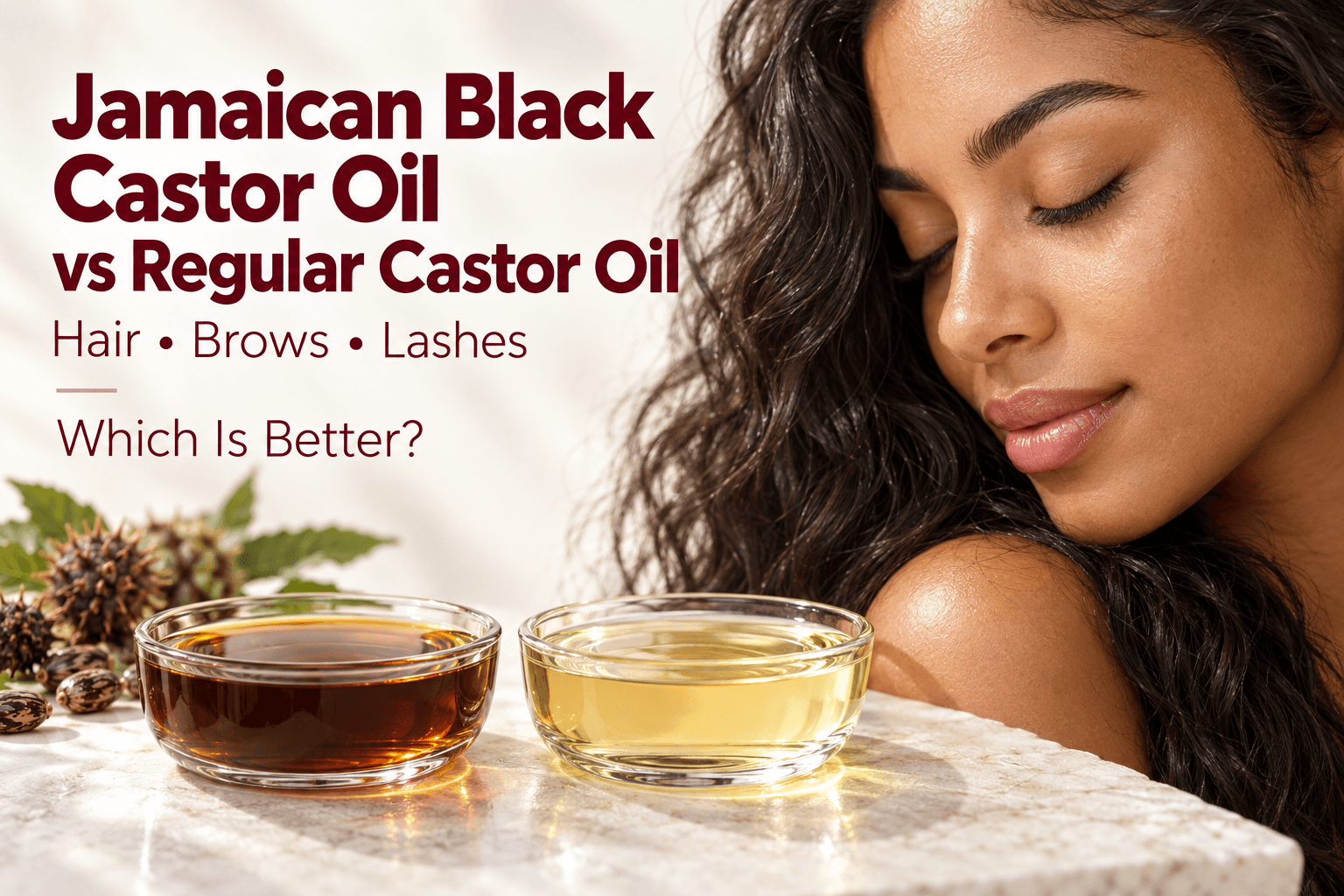
One bottle is pale yellow. The other is deep amber or brown. Both have a loyal following, but does the darker oil deserve the bigger reputation?
Neither type is universally better. The useful differences are how the oil is processed, how it smells, and how the finished product feels in your routine. For hair, both deserve consideration as conditioning ingredients. For brows and lashes, the product’s intended use matters more than its color.
Here is how to choose without confusing a glossy, well-groomed appearance with proven new growth.
What Is the Difference Between Jamaican Black Castor Oil and Regular Castor Oil?
Both oils come from the seeds of Ricinus communis. Castor oil is distinguished by its high proportion of ricinoleic acid, a fatty acid that contributes to its characteristic properties. Choosing the black version does not mean choosing an entirely different botanical ingredient.
Regular castor oil is commonly pale yellow and may be cold-pressed or refined. Traditional Jamaican black castor oil production involves roasting the seeds, then grinding and processing them to extract the oil. Roasting and associated residues contribute to its darker appearance, and unrefined versions may have a noticeable roasted aroma.
However, “Jamaican black” and “unrefined” are not interchangeable terms. COCOJOJO offers both Smoky Jamaican Black Castor Oil, Unrefined and Jamaican Black Castor Oil, Refined. Check the specific product rather than judging processing from color alone.
Which Castor Oil Is Better for Hair?
For hair, start with your preferred finish and how much oil your strands can comfortably carry. Both types can feel substantial, so regular castor oil should not automatically be described as a lightweight alternative.
If you enjoy a traditional roasted oil and its distinctive character, Jamaican black castor oil may suit your routine. If you prefer a paler option, regular castor oil is a practical starting point. Fine hair generally calls for a particularly restrained amount, while coarse or curly hair benefits from distributing the product carefully through separate sections.
Keep expectations realistic. A systematic review published in the Journal of Drugs in Dermatology found weak evidence for castor oil improving hair luster and no strong evidence supporting hair growth. That finding does not justify promising faster growth simply because an oil is darker.
The most useful comparison is therefore how your hair looks and feels after use: Does it appear shinier? Does the amount feel comfortable? Can you wash it out easily?
Which Castor Oil Is Better for Eyebrows?
For brows, choose a product intended for eyebrow use, with clear ingredients and directions. A brow conditioner containing castor oil can fit a grooming routine, but an ordinary hair oil should not automatically become a brow treatment.
Neither the black nor pale version earns an automatic advantage based on color. Consider fragrance, other ingredients, application instructions, and your skin’s response. Follow the label and use clean tools without letting the product spread toward your eyes.
Keep the goal focused on grooming and conditioning existing hairs. Avoid treating a darker, glossier appearance as evidence that new eyebrow hairs have grown.
Which Castor Oil Is Better for Eyelashes?
For lashes, eye-area suitability comes first. Neither Jamaican black castor oil nor regular castor oil is automatically the right choice just because it is natural, organic, or sold for hair care.
The FDA advises using cosmetics near the eyes only when they are specifically intended for that purpose. Choose a lash conditioner with clear directions, keep applicators clean, and stop using it if irritation occurs. A general-purpose castor oil bottle is not a substitute for an eye-area formula.
Do not put either oil directly into your eyes. Castor oil entering the eye can cause irritation and blurred vision.
How to Add Castor Oil to Your Hair Routine
Follow the product’s directions and begin with a small amount. Spread it between your palms, then distribute it lightly through the lengths and ends rather than saturating your hair. Increase only if your hair needs more and the product remains easy to remove.
Avoid vigorous rubbing or pulling through tangles. If your hair becomes greasy, sticky, or difficult to detangle, reduce the amount or choose a formulated conditioner instead.
Before introducing a new topical product, test it on a small area of skin. The American Academy of Dermatology recommends testing new skin-care products for seven to ten days to check for reactions. Skin testing does not establish that a product is suitable for use near the eyes.
For more background on extraction methods, explore COCOJOJO’s guide to cold-pressed oils for skin and hair.
Choosing Your Castor Oil with COCOJOJO
COCOJOJO makes it possible to compare different castor oil options rather than choosing by trend alone. Alongside Jamaican black castor oil, you can explore Castor Oil when organic certification is part of your purchasing priorities.
Read the processing description, ingredient list, and intended-use directions before buying. Organic certification, dark color, and traditional processing describe different qualities; none alone tells you how a product will feel on your hair or whether it belongs near your eyes.
Which One Should You Choose?
Choose Jamaican black castor oil if you prefer the character of a traditionally roasted oil. Choose regular castor oil if you prefer a paler option. For hair, let the finished formula, amount used, and your own experience guide the decision.
For brows and lashes, select products specifically intended for those areas. The best choice is the one that fits your routine, comes with clear directions, and supports realistic expectations about conditioning and appearance.