
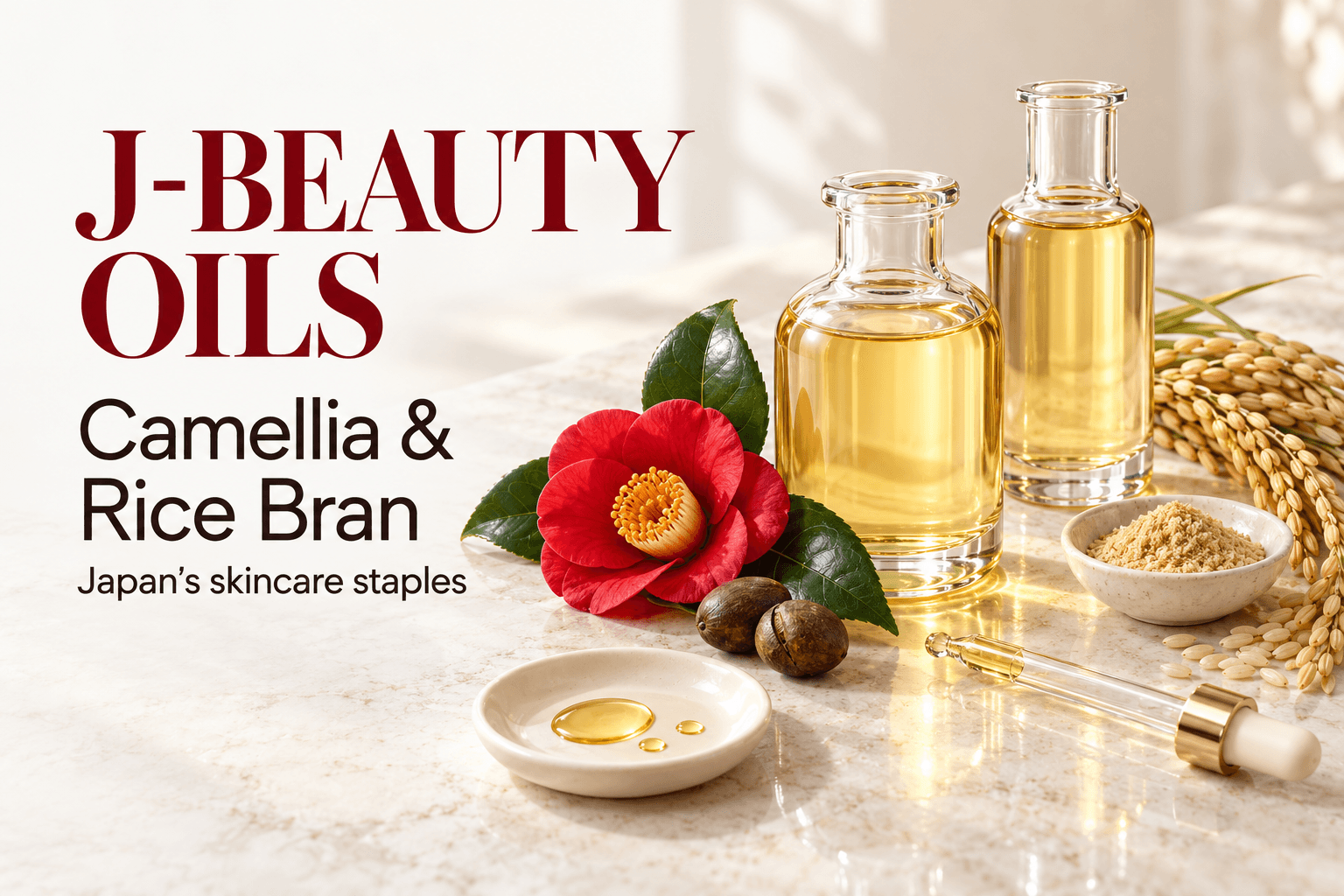
Introduction: A Few Drops, a Softer Finish
Your moisturizer has done its job, but your cheeks still feel a little dry. Sometimes, a small finishing layer of facial oil can make your routine feel more comfortable.
Camellia oil and rice bran oil are two botanical ingredients associated with Japanese beauty. Their appeal comes from their skin-conditioning lipids, pleasant application, and ability to complement a moisturizing routine.
Understanding their differences helps you choose an oil for your skin’s needs and enjoy it without overcomplicating your skincare.
Why These Oils Belong in the J-Beauty Conversation
Camellia seed oil has a longstanding connection to Japanese skin and hair care. Japan’s National Tourism Organization also identifies camellia seed oil as an ingredient used in cosmetics. Rice bran and rice bran oil appear among ingredients described in Japanese skincare traditions and modern formulations.
Their lasting appeal is easy to understand: botanical oils can add softness, improve application slip, and leave a fresh-looking sheen. Used thoughtfully, they fit beautifully into a routine built around cleansing, moisturizing, and daily sun protection.
Camellia Oil: Know Your Botanical Name
Camellia oil is extracted from the plant’s seeds. The red flower may be its recognizable symbol, but the seeds supply the oil.
Traditional Japanese tsubaki oil generally refers to Camellia japonica seed oil. However, products called camellia oil can also come from Camellia oleifera or Camellia sinensis. These species have different lipid profiles, so their names should not be treated as interchangeable. Research comparing the oils found meaningful differences in their fatty acids and other constituents.
For skincare, camellia oil’s practical appeal is its emollient role: helping the skin’s surface feel softer and smoother. The texture and finish depend on the particular oil, its processing, and how much you apply.
Explore COCOJOJO Camellia Seed Oil Unrefined, and check the botanical identity in the product details when comparing camellia oils.
Rice Bran Oil: A Conditioning Oil From the Rice Grain
Rice bran oil comes from the bran layer removed during rice milling. It contains a mixture of fatty acids and naturally occurring compounds, including forms of vitamin E and gamma-oryzanol. Their amounts vary with the rice source and processing method.
Its cosmetic appeal centers on conditioning the skin and adding a supple finish. It can be especially appealing when a moisturizing routine needs an additional touch of softness.
There is also research on rice bran oil in finished skincare formulations. A study published in the Journal of Nanobiotechnology found improved skin moisture after applying a nanoemulsion containing rice bran oil. That result applies to the tested formula; it does not establish identical results for plain oil or every rice bran product.
To explore this ingredient for your routine, view COCOJOJO Rice Bran Oil Unrefined.
Camellia Oil vs Rice Bran Oil: How to Choose
Choose by the product’s botanical identity, texture, and how your skin responds.
Camellia oil is worth exploring if you enjoy a smooth, silky application. Check the species because one camellia oil may differ considerably from another.
Rice bran oil is worth exploring if you want a conditioning botanical oil with its characteristic mixture of fatty acids and naturally occurring minor components.
Neither is automatically the better choice for every skin type. Start with one oil, use a small amount, and assess comfort, shine, and any changes in your skin before introducing another.
How to Use These Oils in Your Skincare Routine
For an uncomplicated introduction, try your chosen oil in the evening, following its product directions.
Cleanse gently, apply your usual hydrating products, and finish with moisturizer. If the oil is suitable for direct facial application, press a small amount over areas that still feel dry. One or two drops can be a useful starting point; increase only if needed.
Before facial use, test the product on a small area. The American Academy of Dermatology recommends testing a new skincare product twice daily for seven to ten days and stopping if a reaction develops.
In the morning, keep broad-spectrum, water-resistant SPF 30 or higher in your routine. Facial oil does not replace sunscreen.
For more botanical options, explore the COCOJOJO guide to natural oils for a dewy-looking complexion.
Is Rice Bran Oil the Same as Rice Water?
No. Rice bran oil is a lipid ingredient extracted from rice bran. Rice water is a water-based preparation, while rice extracts and rice ferments are separate ingredients with their own compositions.
They can appear in the same skincare routine, but they perform different roles. When choosing a product, look at its complete ingredient list and intended use rather than assuming every rice-derived ingredient delivers the same benefits.
Can You Use Camellia or Rice Bran Oil Every Day?
Daily use may suit some people once tolerance is established. Others prefer occasional application or use only on dry areas.
Let your skin guide the frequency. If the finish feels too heavy, reduce the amount. If you develop itching, redness, or a persistent increase in breakouts, stop using the product and reassess.
For sensitive or acne-prone skin, a gradual introduction is especially useful. Botanical origin alone does not guarantee that an oil will suit you.
Conclusion: Bring a Little J-Beauty Into Your Routine
Camellia and rice bran oil offer a simple way to explore botanical skincare through softness, comfortable application, and a dewy-looking finish.
Choose the ingredient carefully, check its identity, and begin with a few drops alongside your moisturizer. With camellia and rice bran options in the COCOJOJO skincare collection, you can build a personal ritual around the textures your skin enjoys.