
Introduction: Good Oil Storage Protects Every Drop
A cosmetic oil may look simple, but its freshness can change according to how you handle and store it. Light, heat, oxygen, moisture, and repeated contamination can gradually affect its scent, color, and texture.
The FDA explains that cosmetic shelf life depends partly on how a product is stored and used. Temperature changes and exposure to sunlight or air may cause noticeable changes. Fortunately, a few easy habits can help you care for your oils properly.
Why Cosmetic Oils Lose Their Freshness
Most plant oils contain fatty acids that can react with oxygen over time. This process is called oxidation. Heat and direct light can accelerate it, causing the oil to develop an unpleasant smell or a different texture.
Some cold pressed and unrefined oils may require more careful storage because they retain more of their natural components. Their natural color or aroma is not automatically a sign of spoilage. If you want to understand what makes these oils distinctive, explore the COCOJOJO guide to cold pressed oils for skin and hair.
Store Oils in a Cool, Dark Place
The best location for most cosmetic oils is a cool, dry cabinet or drawer with a stable temperature. A bedroom cabinet, closed vanity drawer, or shaded closet is usually more suitable than an exposed shelf.
Avoid storing oils on a sunny windowsill, near a radiator, beside a stove, or inside a hot car. A bathroom may also be unsuitable when it becomes hot and humid after showers. The goal is not to make the bottle cold. It is to protect it from repeated heat and temperature changes.
Keep the Bottle Tightly Closed
Oxygen enters the container whenever it is left open. Always replace the cap or dropper immediately after use and make sure it is properly tightened.
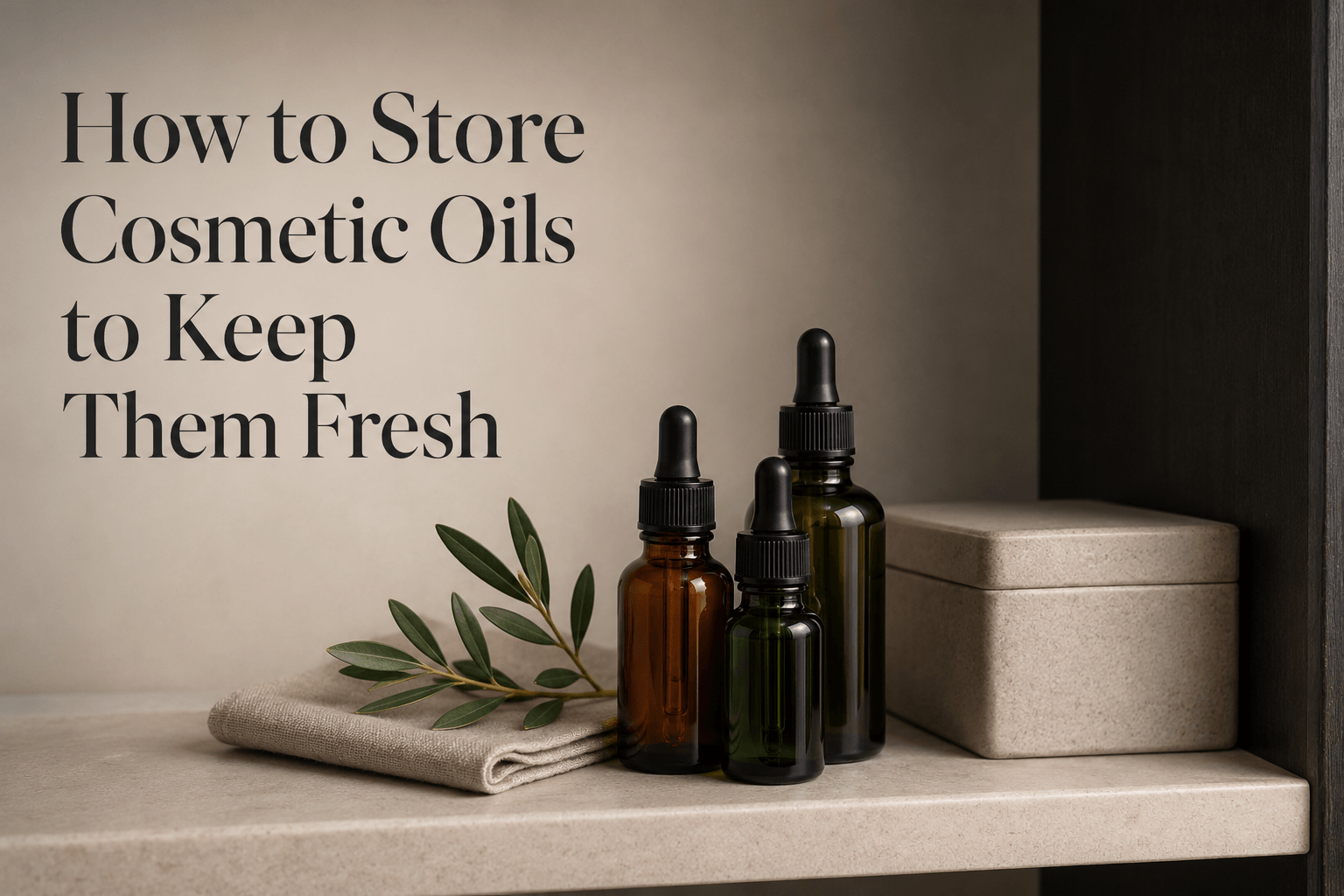
Keep the oil in its original dark, opaque, or protective packaging whenever possible. Amber and dark green bottles help reduce light exposure, but they should still be stored away from direct sunlight.
If you purchase oil in a large size, you can place a small working amount in a clean, completely dry bottle. Keep the main container tightly closed between refills. Never pour fresh oil into a bottle that still contains an older batch.
You can browse COCOJOJO certified organic oils to compare available products and select a size that suits your routine.
Keep Droppers Clean and Dry
A dropper should not touch your face, scalp, fingers, or wet surfaces. Contact can transfer moisture, skin oils, or other material back into the bottle.
Dispense the oil into a clean palm without touching the dropper to the skin. Replace it immediately afterward. Do not rinse a dropper with water and return it to the bottle while it is wet.
Use clean, dry hands and avoid sharing facial oils with other people. These simple habits help keep the packaging and its contents cleaner throughout use.
Should Cosmetic Oils Be Refrigerated?
Not every cosmetic oil needs refrigeration. Follow the storage directions printed on the product or provided by the manufacturer.
Certain delicate oils may benefit from refrigeration after opening, but cold temperatures can also make some oils cloudy, thicker, or partially solid. That physical change does not always mean the oil is spoiled.
If refrigeration is recommended, keep the cap tightly closed. Allow the bottle to return toward room temperature while it remains sealed. Never microwave cosmetic oil or place the bottle in very hot water.
Record the Date You Opened It
Check the bottle for an expiration date, storage instructions, or a period after opening symbol. This symbol resembles an open jar and may contain markings such as 6M or 12M.
Because not every cosmetic sold in the United States displays an expiration date, write the opening date on the bottom of the bottle. This removes the guesswork later. Always follow the specific brand guidance instead of assuming that every natural oil has the same shelf life.
How to Recognize an Oil That Is No Longer Fresh
Inspect the oil before applying it, especially if the bottle has been open for a long time. Possible warning signs include:
- A sharp, sour, stale, waxy, or paint-like smell
- A major unexplained change in color
- A sticky or unusually thick texture
- Unexpected separation in a blended product
- Damaged packaging or a cap that no longer seals
Natural oils can vary slightly in color and aroma, while cooler temperatures may cause temporary cloudiness. Compare the product with how it looked and smelled when first opened. If the change is strong or you are uncertain, stop using it. Do not add fragrance or essential oil to hide an unpleasant odor.
Buy a Size That Fits Your Routine
A large bottle is not always the best value if it remains open for too long. Choose an amount you can use consistently within the product’s stated period.
For a simple face, body, or hair routine, consider options such as Jojoba Golden Oil, Unrefined or Argan Oil, Unrefined. COCOJOJO offers different natural oils and sizes, helping you choose a bottle that matches how frequently you plan to use it.
Conclusion: Freshness Starts With Better Storage
Proper cosmetic oil storage is simple: keep the bottle cool, dark, dry, clean, and tightly closed. Avoid direct sunlight, bathroom humidity, hot cars, and unnecessary exposure to air. Record when you opened the bottle and pay attention to changes in scent, color, or texture.
With thoughtful storage and hygienic use, you can enjoy every bottle as intended and reduce the chance of leaving an oil forgotten until its best period has passed.