
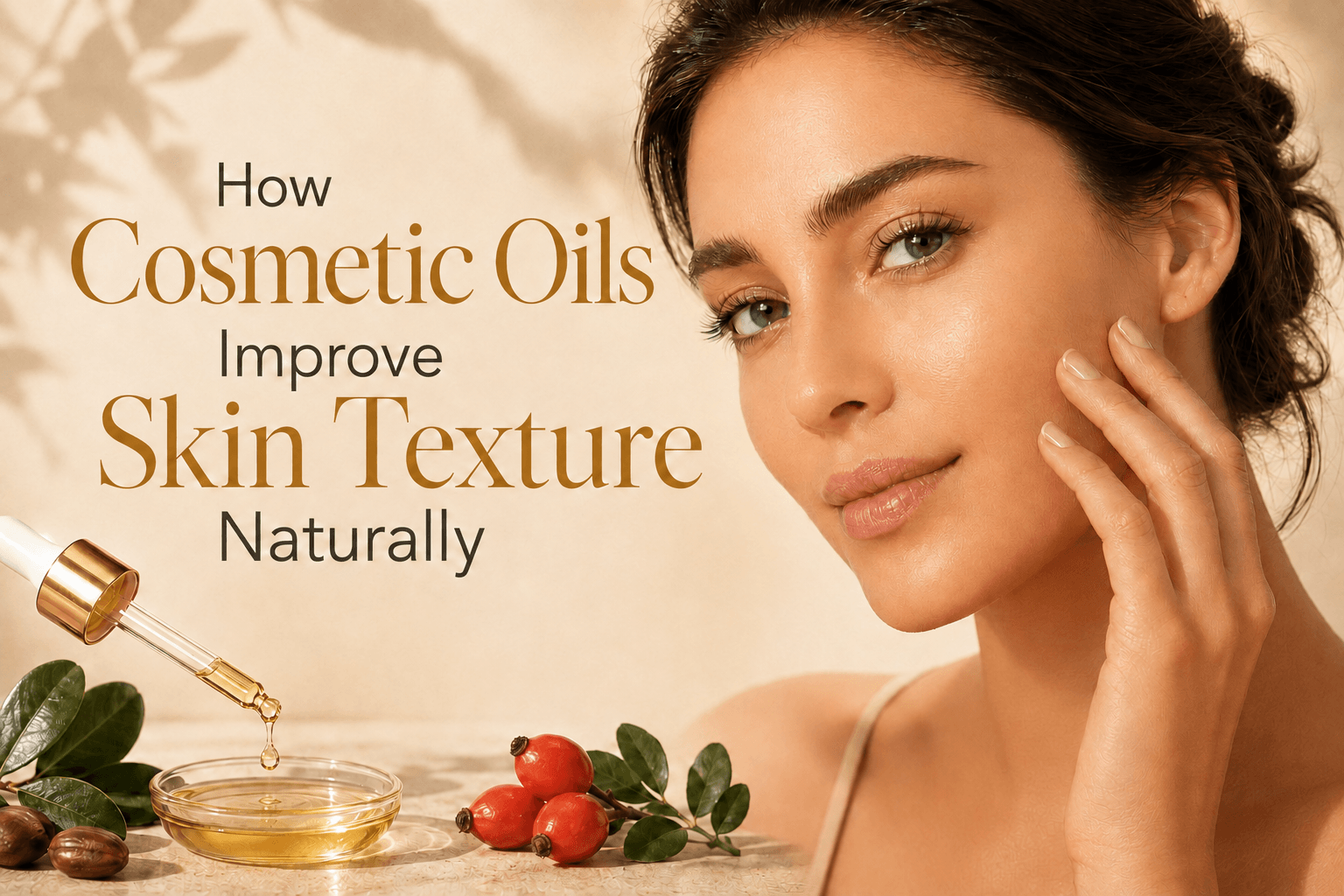
Introduction: Smooth Skin Is About More Than Exfoliation
When skin feels rough or looks dull, stronger exfoliation may seem like the obvious answer. Yet uneven texture is often more noticeable when the skin lacks moisture or its surface barrier is under stress. Repeated scrubbing can make dryness and sensitivity feel worse.
Cosmetic oils take a gentler approach. They soften the outer surface, support moisture retention, and give dry areas a more supple feel. With the right oil and application method, skin can appear smoother, calmer, and more radiant without an unnecessarily complicated routine.
What Do Cosmetic Oils Actually Do?
Cosmetic oils primarily work as emollients. They help soften the spaces between dry surface cells, making rough patches feel smoother to the touch. Many oils also leave a light protective layer that helps slow moisture loss.
This function reflects the skin’s natural design. The Cleveland Clinic explains that the skin’s oil glands help keep it soft and smooth, highlighting why balanced surface lipids matter.
Oils can also improve the way light reflects from the skin. A moisturized, supple surface reflects light more evenly, creating a healthy glow without glitter or heavy makeup. However, oils do not permanently remove pores, scars, wrinkles, or medical skin conditions.
How Oils Make Rough Texture Feel Smoother
Skin texture can appear more pronounced when the outer layer becomes dry and flaky. Applying a suitable cosmetic oil helps soften these flakes and reduce the tight feeling associated with moisture loss.
The most effective approach is to apply oil after a hydrating product or onto slightly damp skin. Water provides hydration, while the oil helps retain it. Oil alone cannot replace water in the skin, so applying several drops to completely dry, dehydrated skin may produce shine without addressing the underlying tightness.
Consistent application matters more than using a large quantity. Two or three drops are often enough for the face, depending on the oil and individual skin needs.
Choosing the Right Cosmetic Oil for Your Skin
Different oils have different textures, absorption rates, and fatty acid profiles. Selecting an oil that suits your skin is more important than following whichever ingredient is currently popular.
Jojoba Golden Oil has a distinctive wax ester composition and a smooth, conditioning feel. It can be a practical starting point for people who want a versatile facial, body, or hair oil.
Squalane Oil has a lightweight, silky texture that spreads easily. It is especially appealing to people who dislike the heavier finish associated with richer botanical oils.
Rosehip Oil offers a richer botanical experience and naturally contains fatty acids and plant compounds. It can complement routines focused on dryness, dullness, and uneven-looking texture.
Camellia Seed Oil provides a soft, elegant slip that works well when the goal is supple-feeling skin with a comfortable finish.
Natural ingredients are not automatically suitable for everyone. Always review the product information and patch test a small area before regular facial use, especially if your skin is sensitive or reactive.
A Simple Routine for Better-Looking Texture
Begin with a gentle cleanser that removes buildup without leaving the skin feeling stripped. Follow with a water-based serum, mist, or moisturizer while the skin is still slightly damp.
Warm two or three drops of oil between clean fingertips, then press them gently over the face. Avoid aggressive rubbing, particularly around sensitive areas. If your skin is dry, apply the oil over moisturizer. If it is combination or naturally oily, try one or two drops only where extra softness is needed.
During the day, finish with broad-spectrum sunscreen. Cosmetic oils may support softness and comfort, but they do not replace sun protection.
Common Mistakes That Can Work Against Your Skin
Using too much oil is one of the most frequent mistakes. More product does not necessarily produce faster or better results. Excess oil can feel heavy, interfere with makeup, or make it difficult to understand how your skin is responding.
Introducing several oils at once is another problem. Start with one product and observe your skin before adding anything else. This makes it easier to identify whether the oil improves comfort or causes irritation.
Avoid treating oils as exfoliants. They can soften the appearance of dry, flaky texture, but they do not dissolve every type of buildup. When exfoliation is appropriate, use a gentle product at a sensible frequency rather than relying on harsh scrubs.
How Long Does It Take to Notice a Difference?
The immediate effect is usually improved softness and a more comfortable surface feel. Skin may also appear more luminous shortly after application because the oil creates a smoother finish.
Longer-term improvements depend on consistent use, the rest of the skincare routine, environmental conditions, and the cause of the uneven texture. Persistent roughness, inflammation, itching, or sudden changes should be assessed by a qualified healthcare professional.
Think of cosmetic oils as supportive skincare rather than instant corrective treatments. Their strength lies in helping maintain a soft, flexible, and well-conditioned surface.
Conclusion: Let the Right Oil Support Your Skin
Cosmetic oils improve the feel and appearance of skin texture by softening dry surface cells, supporting moisture retention, and creating a more supple finish. The best results come from choosing an appropriate oil, applying only a few drops, and pairing it with hydration and daily sun protection.
CocoJojo offers a varied selection of cosmetic oils with different textures and botanical profiles, making it easier to find an option that fits your preferences. Explore more ingredient guidance through the CocoJojo Beauty Education and Ingredient Guides, then build a focused routine that gives your skin what it actually needs.