
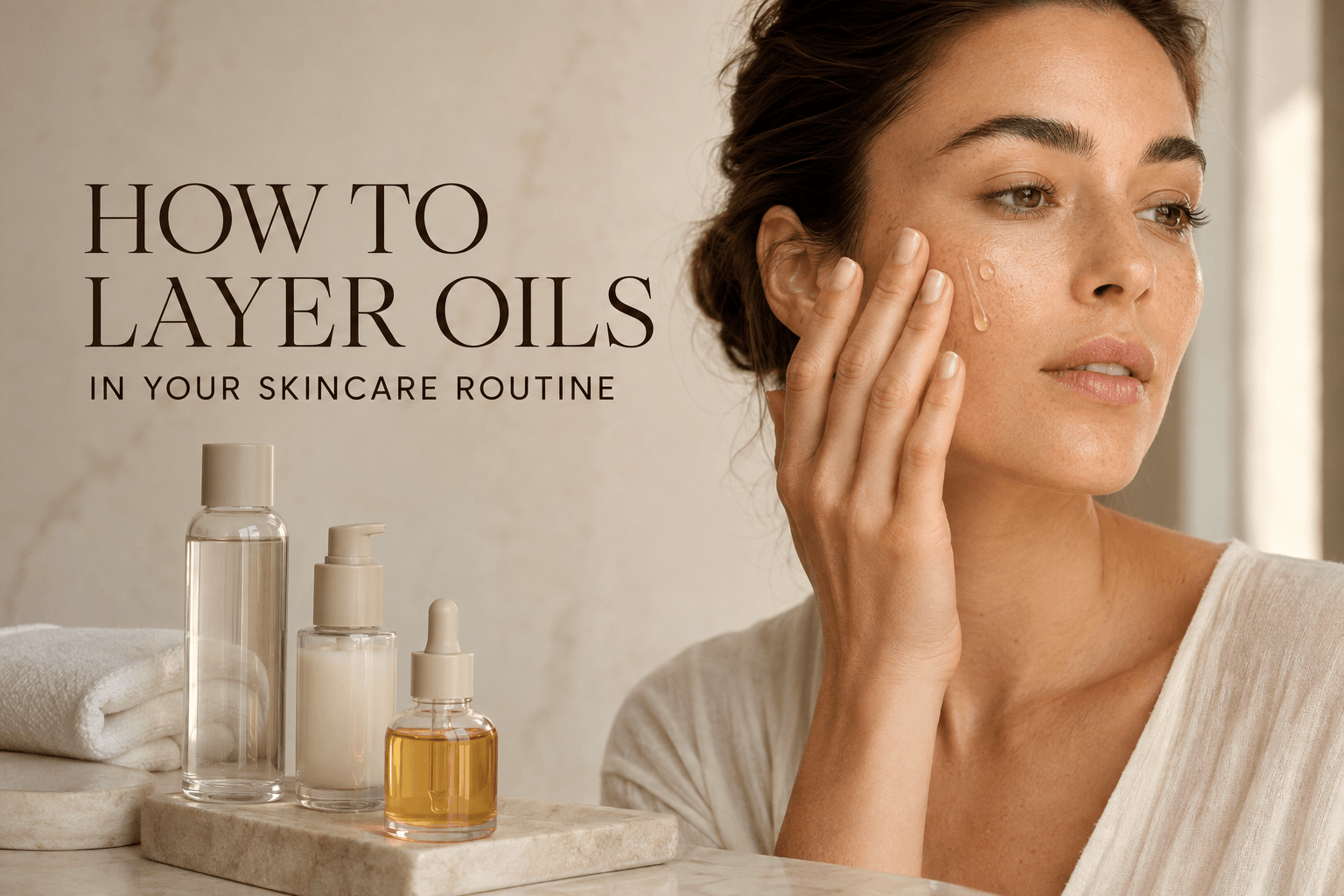
Introduction: Your Face Oil May Be in the Wrong Place
Facial oil can leave skin feeling soft, comfortable, and beautifully conditioned. But when it is applied at the wrong stage, even a carefully selected oil may sit heavily on the surface or interfere with lighter products.
The secret is not using more oil. It is applying a small amount at the correct time. Once you understand how water-based products, moisturizers, and oils work together, layering becomes simple. For a deeper look at why these ingredients are useful, explore the benefits of natural oils in your skincare routine.
The Simple Rule: Water First, Oil Last
A reliable skincare rule is to move from lighter, water-based textures to richer, oil-based textures. Your basic routine should normally follow this order:
- Cleanser
- Toner or essence, if used
- Treatment or water-based serum
- Moisturizer
- Facial oil
- Sunscreen during the day
The American Academy of Dermatology explains that product order affects how well a routine works. Treatments generally follow cleansing, while moisturizer and sunscreen come later. If you use a prescription product, follow the directions provided by your healthcare professional.
Why Facial Oil Usually Goes After Moisturizer
Water-based serums and moisturizers are designed to deliver water and water-soluble ingredients to the skin. Facial oils contain lipids that soften the surface and help slow moisture evaporation.
Applying oil first may make it more difficult for some water-based products to spread evenly. Applying it after moisturizer creates a comfortable finishing layer that helps maintain the moisturized feel beneath it.
A facial oil does not always replace a moisturizer. If your skin feels tight or dehydrated, use a moisturizer first and allow the oil to support that layer.
How to Apply Facial Oil Correctly
Complete your cleanser, serum, and moisturizer steps first. While your skin still feels comfortable and slightly dewy, place two or three drops of oil onto clean fingertips.
Rub your fingertips together briefly, then gently press the oil across your cheeks, forehead, and chin. Avoid aggressive rubbing. Pressing helps distribute a small amount evenly without pulling the skin.
If two drops already cover your face, stop there. Dry areas can receive one additional drop, but the finished result should feel soft and conditioned rather than slippery.
How to Layer More Than One Oil
You rarely need several full layers of oil. When using two oils, keep the combined amount to approximately two or three drops.
Apply the lighter, faster-spreading oil first and the richer oil second. You can also combine one drop of each in your palm before pressing the blend onto your skin. This creates a more even finish and reduces the chance of applying too much.
For example, lightweight olive-derived squalane oil can be paired with a small amount of richer unrefined rosehip oil. Introduce one product at a time so you can observe how your skin responds.
Choosing the Right Oil for Your Skin Feel
The best facial oil is not simply the most popular one. Texture, finish, and personal skin comfort all matter.
For a lightweight finish, consider squalane or certified organic jojoba oil. These options spread easily and work well when you want conditioning without a dense after-feel.
For skin that feels dry or rough, rosehip or argan oil can provide a more cushioned finish. If you are uncertain, read COCOJOJO’s guide to choosing an oil for your skin type.
Patch test every new oil before applying it across your face, particularly if your skin is sensitive or reactive.
Morning Versus Evening Layering
Evening is often the easiest time to introduce facial oil. There is no makeup or sunscreen to layer afterward, and you can adjust the amount based on how your skin feels in the morning.
During the day, use only one or two drops and allow the oil to settle before applying sunscreen. Sunscreen must remain the final skincare layer. Never mix facial oil directly into sunscreen because doing so may affect the uniformity of its application.
If oil makes your daytime routine feel heavy, reserve it for nighttime and use a lighter moisturizer in the morning.
Common Face Oil Layering Mistakes
Using too much: More oil does not automatically create more moisture. Excess product can leave a greasy surface and make makeup move.
Applying oil before every serum: Oil may affect how evenly a water-based serum spreads. Apply watery products first unless the product directions say otherwise.
Mixing oil into sunscreen: Keep sunscreen separate and apply it as the final skincare step.
Adding several new oils at once: Introduce products separately. This makes it easier to identify the source of irritation or an unwanted texture.
Treating essential oils like facial carrier oils: Essential oils are highly concentrated and should not be applied undiluted. They are not interchangeable with jojoba, squalane, argan, or rosehip oil.
Frequently Asked Questions
Can Face Oil Replace Moisturizer?
Sometimes an oil may feel sufficient for naturally oil-rich skin, but it does not supply the same water-based hydration as a moisturizer. Dry or dehydrated skin will usually feel more comfortable when moisturizer is applied first.
Should Face Oil Go Before or After Retinol?
Follow the directions provided with the treatment. A common routine is treatment, moisturizer, then oil. If a dermatologist has given you a different order, follow that guidance.
Can I Use Facial Oil Every Night?
It depends on your skin and the oil’s texture. Begin two or three nights per week, then increase the frequency if your skin remains comfortable. Read COCOJOJO’s complete guide to how often you should use face oil.
Should Oil Be Applied to Wet or Dry Skin?
Apply it after your water-based products and moisturizer, while the skin still feels slightly dewy. This helps the oil spread with fewer drops.
Conclusion: Make Oil the Finishing Touch
The correct order is uncomplicated: cleanse, apply treatments, moisturize, finish with facial oil, and use sunscreen last during the day. Start with two drops and adjust according to your skin’s comfort.
COCOJOJO offers a broad selection of botanical oils with different textures, from lightweight squalane and jojoba to more cushioned rosehip and argan. Choosing the right texture and applying it at the right stage can turn facial oil from a greasy extra into a refined finishing step.