
Introduction
Fresh citrus, soft florals, or the warmth of woods. The fragrance you love often begins with a feeling you want to capture.
Custom scent creation workshops give that feeling a creative direction. Through guided smelling, blending, and small adjustments, you can explore what makes a fragrance feel personal. COCOJOJO’s aromatic ingredients and carrier oils offer a practical starting point for continuing that exploration.
What Are Custom Scent Creation Workshops?
A custom scent creation workshop is a guided session where participants explore aromatic materials and develop a fragrance around their preferences. Formats vary: some introduce individual ingredients, while others let you combine prepared fragrance blends known as accords.
The experience can suit someone discovering perfumery, friends planning a creative activity, or a beauty enthusiast exploring a signature scent.
Before booking, check what you will make. An oil perfume, an alcohol-based spray, and a home fragrance each involve different materials and formulation requirements.
What Happens During a Fragrance Blending Workshop?
A useful session begins with your preferences. Think about whether you enjoy bright, airy fragrances, soft botanical aromas, or deeper woody scents. Describing a place or atmosphere can also help communicate your idea.
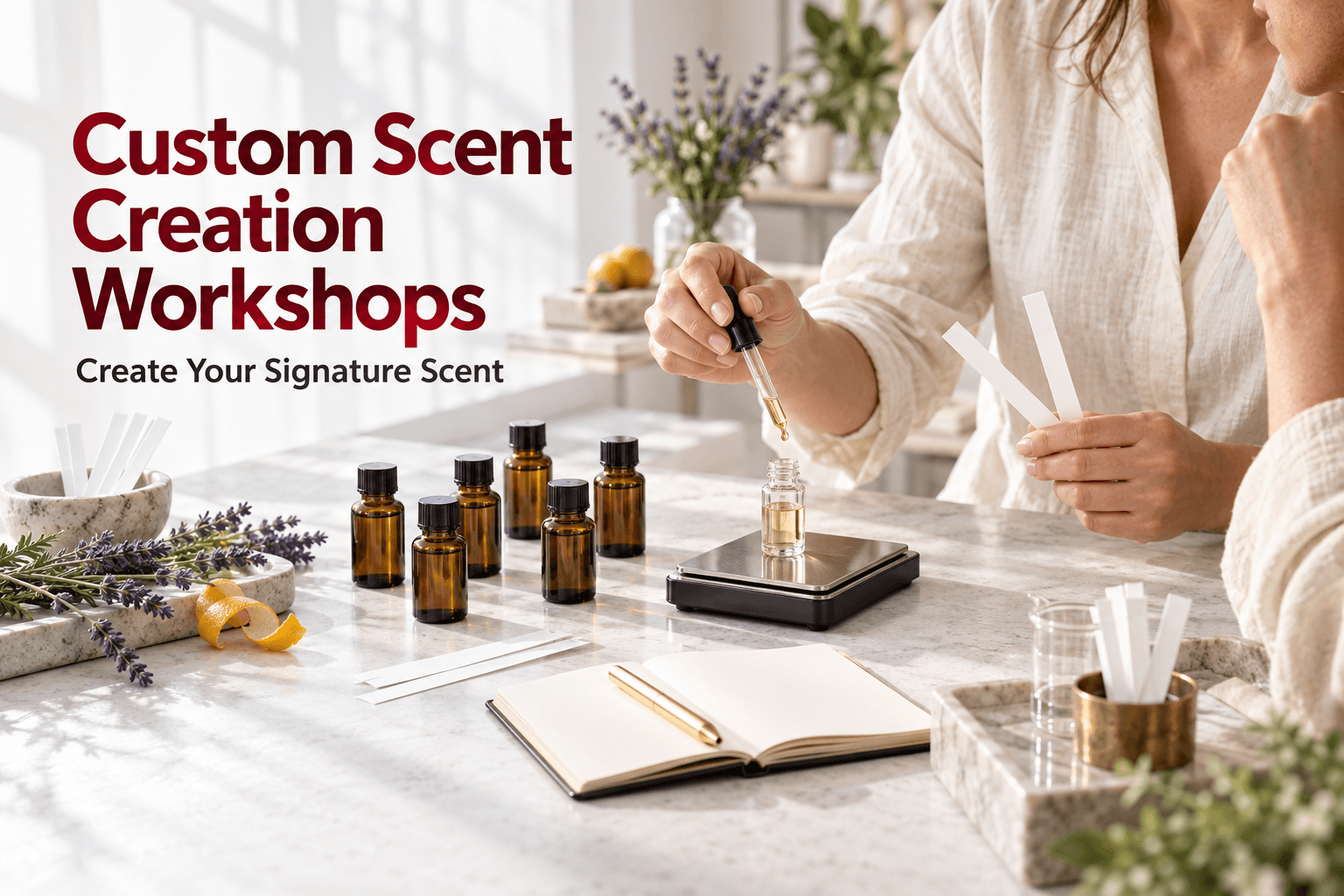
Next comes smelling and comparison. Testing strips allow you to evaluate materials individually before exploring combinations. Guided trials help you discover how small changes affect the balance.
Look for a workshop that includes written formula records. Knowing what went into each version makes it easier to understand your choices and revisit a blend you enjoyed.
Understanding Top, Heart, and Base Notes
Fragrance changes as its aromatic materials evaporate. Learning to notice that development is an important part of creating your own signature scent.
Top notes shape the opening impression and often feel bright, citrusy, or fresh. Heart notes establish the fragrance’s central character, frequently through floral, herbal, or softly spicy aromas. Base notes contribute the deeper woody, earthy, or resinous qualities that remain as the opening fades.
These categories are guides, and individual materials can behave differently within a blend. COCOJOJO’s guide to mixing custom scent blends introduces this structure and explains how to evaluate a scent as it develops.
Choose a Workshop That Matches Your Creative Goal
Ask how much freedom you will have to customize the fragrance, which materials are included, and whether the session provides individual guidance. Confirm the finished bottle size and whether you can keep or reorder your formula.
It also helps to understand the ingredient palette. Essential oils provide botanical aromas, while fragrance compositions can combine natural and synthetic aromatic materials to create a broader range of scent effects.
COCOJOJO’s article on fragrance oils and essential oils explains their differences and why suitability depends on the intended product.
Explore COCOJOJO Ingredients for Personal Scent Blends
For a botanical fragrance direction, COCOJOJO’s Lavender Essential Oil offers a recognizable floral aroma to explore in appropriately formulated blends. It is a concentrated aromatic ingredient, so its role and concentration should be considered carefully.
An oil perfume also needs a suitable carrier. COCOJOJO’s MCT Oil, Fractionated Coconut Oil is a lightweight liquid with a neutral to very mild aroma. It can provide a base for perfume oils while allowing the selected fragrance to remain the focus.
Understanding these different roles makes shopping more purposeful: one ingredient contributes aroma, while the other carries and dilutes compatible aromatic materials.
Thoughtful Formulation Is Part of the Craft
A pleasing scent on a testing strip still needs appropriate formulation before skin application. The concentration must account for the exact ingredients and how the finished product will be used.
The International Fragrance Association’s guidance explains that restrictions on fragrance materials depend on the intended application, with concentration limits applying to the finished consumer product.
Choose an instructor who works with supplier documentation and evaluates the complete blend. A single dilution ratio cannot establish suitability for every aromatic ingredient.
Conclusion
Custom scent creation workshops turn fragrance discovery into a personal creative experience. With clear guidance, thoughtful ingredient choices, and a recorded formula, you can begin developing a scent that reflects your taste.
Continue exploring with a small, purposeful selection of COCOJOJO ingredients, giving each new blend the time and attention it deserves.