
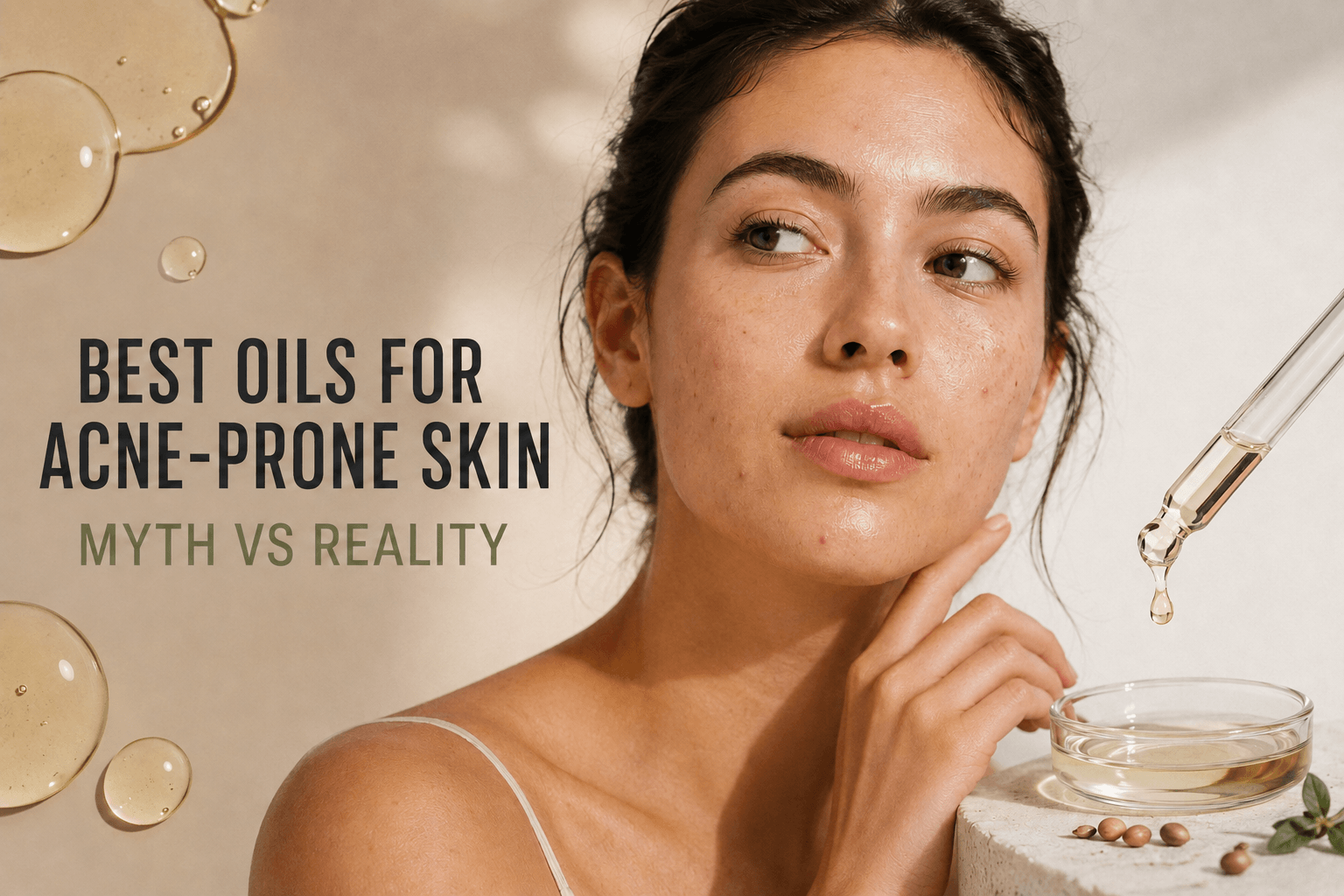
Introduction: Can Acne-Prone Skin Really Use Facial Oil?
Facial oil and acne sound like natural enemies. If excess sebum contributes to breakouts, adding more oil may seem completely wrong. The reality is more nuanced.
A carefully selected facial oil can soften dry areas and help reduce the tight feeling caused by cleansing or acne-care products. However, facial oil does not address the causes of acne, unclog pores, or replace professional skincare guidance.
The best oil for acne-prone skin is not the one with the biggest list of promises. It is a simple, lightweight option that works with your skin in a very small amount.
Myth: Every Facial Oil Clogs Pores
Reality: An oil does not automatically cause breakouts simply because it feels oily.
How your skin responds depends on the ingredient, finished formula, amount applied, other products in your routine, and your individual sensitivity. Online comedogenic ratings can be useful for comparison, but they cannot guarantee how a finished product will behave on your face.
The American Academy of Dermatology’s acne-prone skincare guidance recommends looking for products labeled non-comedogenic, oil-free, or unlikely to clog pores. Even then, personal testing still matters.
Introduce one product at a time. This makes it much easier to identify the cause if new congestion appears.
Myth: Facial Oil Provides All the Hydration Skin Needs
Reality: Facial oil softens the skin and helps hold moisture in, but it does not supply water on its own.
Apply a lightweight moisturizer first, especially if acne-care products have left your skin feeling dry. Then press one drop of oil over the areas that need extra comfort. Using several drops on completely dry skin may leave a greasy layer without addressing dehydration.
Think of facial oil as a finishing step, not a complete skincare routine.
The Best Oil Candidates for Acne-Prone Skin
No oil is universally suitable for every acne-prone complexion. These four options are practical starting points because they can be used sparingly and offer relatively light cosmetic textures.
1. Squalane: The Lightweight Starting Point
Squalane is an oil-like emollient known for its smooth, lightweight slip. It spreads easily, feels less greasy than many richer botanical oils, and is highly stable.
This makes COCOJOJO Squalane Oil, Olive Derived a practical candidate for acne-prone skin that also feels tight or moisture-depleted. Begin with one drop over moisturizer rather than coating the entire face.
Best suited to: Combination, dehydrated, or texture-sensitive skin.
Reality check: Squalane can support softness and comfort, but it is not an acne solution.
2. Jojoba: Technically a Liquid Wax
Jojoba is commonly called an oil, but its composition is closer to a liquid wax. It creates a smooth, conditioned feel without the heavy cushion associated with richer facial oils.
Try COCOJOJO Jojoba Oil, Unrefined Certified Organic on a small area before applying it widely. One drop may be enough for the whole face.
Best suited to: Oily, combination, or slightly dry acne-prone skin.
Reality check: Jojoba is often said to control sebum because it resembles components found on the skin’s surface. This does not establish that it can regulate oil production or clear acne.
3. Grapeseed Oil: Light and Linoleic-Rich
Grapeseed oil has a light texture and contains a high proportion of linoleic acid. It can feel less coating than oils dominated by heavier fatty acids, making it a possible option for people who dislike a lingering oily finish.
COCOJOJO Grape Seed Oil, Unrefined, Partially Filtered can be introduced as a one-drop evening step. Keep the container tightly closed and away from heat and direct light.
Best suited to: Oily or combination skin seeking a lighter finish.
Reality check: Being rich in linoleic acid does not make an oil a clinically established acne remedy.
4. Rosehip Oil: Better for Dry, Acne-Prone Skin
Rosehip oil may suit acne-prone skin that also experiences dryness or a rough surface feel. Its naturally warm color and botanical scent can be more noticeable than squalane or jojoba.
Start with COCOJOJO Rosehip Oil, Unrefined two or three evenings per week. For a closer comparison, read the COCOJOJO guide to rosehip oil versus jojoba oil.
Best suited to: Normal, dry, or moisture-depleted acne-prone skin.
Reality check: Rosehip oil can support a softer and more conditioned appearance, but it should not be presented as a way to remove acne scars.
Myth: Natural Means Suitable for Every Face
Reality: Natural ingredients can still cause irritation, sensitivity, or congestion.
Undiluted essential oils are different from gentle carrier oils. Tea tree, citrus, peppermint, and strongly fragranced blends may feel fresh, but concentrated aromatic compounds can be difficult for reactive skin to tolerate.
Also approach rich oils and butters carefully. Coconut oil, olive oil, cocoa butter, and heavy multi-oil blends may work well on the body while feeling too occlusive on an acne-prone face.
This does not make them bad ingredients. It simply means they may not be the best facial starting point.
Myth: New Breakouts Mean the Oil Is Purging Your Skin
Reality: Most plain cosmetic oils do not accelerate skin cell turnover, so they are not expected to cause a traditional adjustment period.
If small bumps or breakouts begin after introducing an oil, do not assume the product is pushing impurities out. Reduce the amount or stop using it and observe how your skin responds.
Itching, burning, swelling, or persistent redness is also a reason to discontinue use. Patch testing cannot predict every reaction, but it provides a safer starting point.
How to Introduce a Facial Oil Without Overloading Your Skin
Keep the process simple:
- Patch test the oil on a small area.
- Cleanse with a gentle facial cleanser.
- Apply your usual acne-care product as directed.
- Follow with a lightweight moisturizer.
- Press one drop of oil over the skin.
- Begin two or three nights per week.
- Introduce no other new product at the same time.
Do not mix facial oil directly into sunscreen. During the day, apply a non-comedogenic broad-spectrum sunscreen as the final skincare layer.
The COCOJOJO guide to how often you should use face oil can help you adjust the frequency according to texture, climate, and skin response.
Where COCOJOJO Fits Into an Acne-Prone Routine
COCOJOJO offers individual cosmetic oils with clearly identified oil types, making it easier to compare textures without beginning with a complicated blend.
Start with one lightweight option, use one drop, and keep the rest of your routine consistent. Squalane may suit someone who wants minimal residue, while jojoba or grapeseed may appeal to those exploring botanical textures. Rosehip can provide a more conditioned finish for skin that feels dry.
The goal is not to collect every trending oil. It is to find the smallest, simplest addition that leaves your skin feeling comfortable.
Conclusion: The Best Oil Is the One Your Skin Accepts
The myth is that every oil either clears acne or immediately clogs pores. The reality sits between those extremes.
Squalane, jojoba, grapeseed, and rosehip are reasonable cosmetic options to test, but none can promise clear skin. Use facial oil as a supporting emollient, not as your main acne solution. Patch test, begin with one drop, and stop if your skin becomes more congested or irritated.
Persistent, painful, or scarring acne deserves professional dermatological care. A thoughtful oil can improve the feel of your routine, but effective acne management must address the acne itself.