
Introduction
Does your facial oil feel too heavy, or does your hair oil leave more shine than you want? The answer may be a better balance between ingredients.
The best oil blending techniques help you control texture, spread, and the finish left behind. Start with a small selection of COCOJOJO oils, measure your ingredients, and adjust the combination around how you want it to feel.
Give Each Oil a Clear Purpose
Begin with one goal, such as a lighter facial oil, a smooth body oil, or a conditioning blend for hair ends. Two or three ingredients make an excellent starting point because their individual contributions are easier to understand.
COCOJOJO Jojoba Golden Oil (Unrefined) provides a versatile base for skin and hair conditioning.
For a lighter texture and easier spreading, consider COCOJOJO Squalane Oil (Olive Derived). Its silky feel makes it useful when you want to soften a richer blend’s finish.
COCOJOJO Argan Oil (Unrefined) brings another conditioning option for dry skin and hair care. Try it as a supporting ingredient, then adjust its proportion according to your preferred feel.
Measure by Weight for Consistent Results
Measure in grams when developing a recipe you want to repeat. Drop size changes with the dispenser and the oil, so equal numbers of drops do not necessarily give equal amounts.
For the small trials below, use a digital scale that reads to 0.01 g. Place a clean, completely dry mixing beaker on the scale and press tare to reset it to zero. Add the first oil, record its weight, tare again, and add the next.
Keep the exact product names and weights in a notebook. This makes it easier to reproduce a favorite combination or identify which adjustment changed the texture.
Try Two Simple Custom Oil Combinations
These suggested trial ratios give you a practical starting point for comparing textures. Personal preference and skin tolerance should guide your adjustments.
For a lighter facial oil trial: Combine 6 g squalane with 4 g jojoba oil. This 10 g batch lets you explore a blend built around squalane’s light, silky character.
For a conditioning body or hair oil trial: Combine 5 g jojoba oil, 3 g argan oil, and 2 g squalane. Try a small amount on body skin or smooth a little over hair ends after checking your tolerance.
Keep the test batch small until you know whether you enjoy its finish. Ten grams describes the weight of the mixture, so do not assume it will fit into a 10 mL bottle.
Mix Gently at Room Temperature
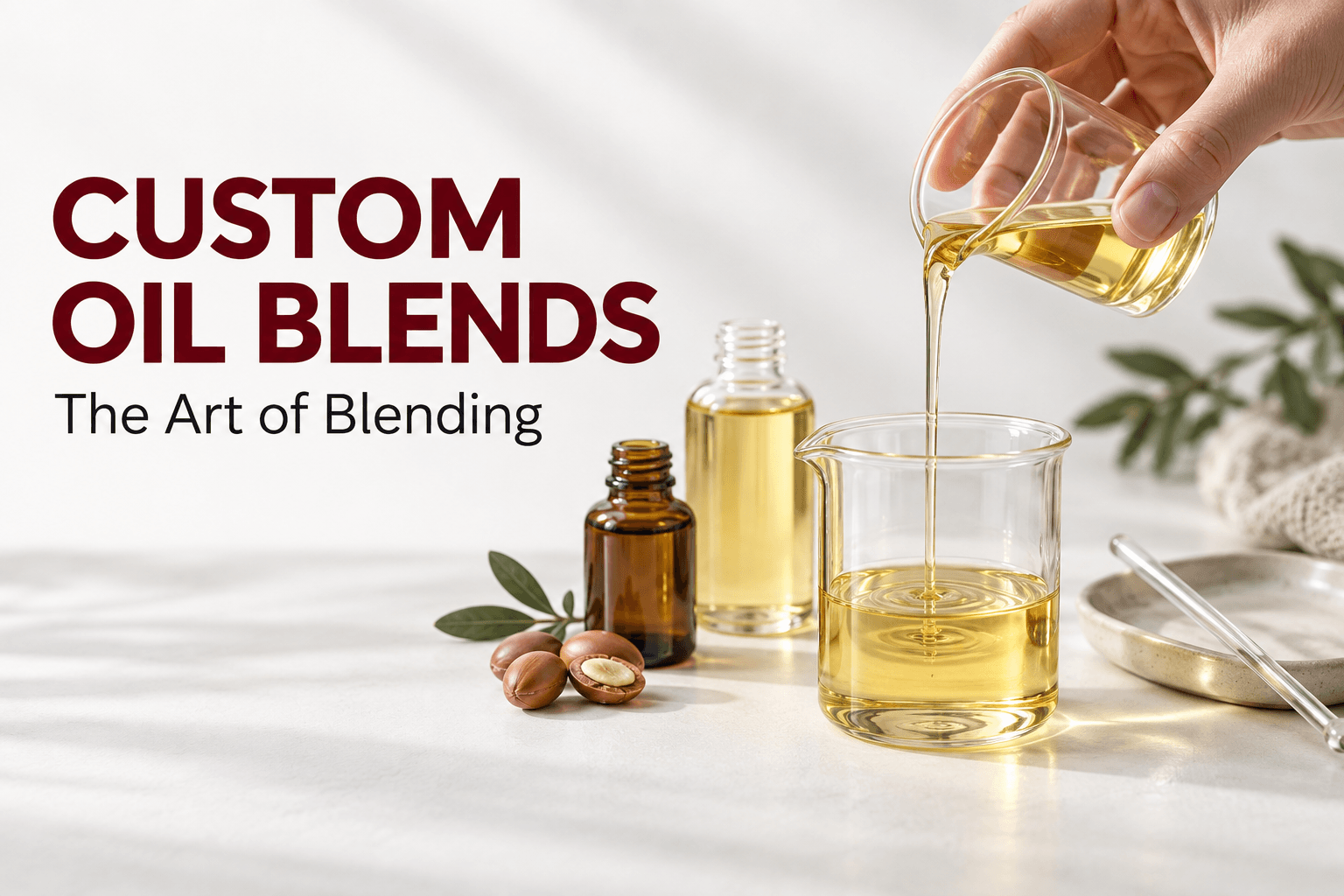
Use clean, completely dry tools and a separate pipette for each ingredient. Add the measured oils to your beaker, then stir slowly with a clean glass rod, reaching the bottom and sides until the mixture is uniform.
The liquid oils in these trial recipes can be blended at room temperature. Heating is unnecessary, and vigorous whipping adds bubbles that make the blend harder to assess.
Let visible bubbles settle, then transfer the oil into a clean, dry bottle with enough room for its closure. Avoid touching the inside of the bottle or returning leftover trial oil to the original containers.
Refine One Variable at a Time
Test unfamiliar oils and the finished mixture on a small skin area before wider use, and stop if irritation develops.
Once tolerated, compare the same small amount under similar conditions. Notice how easily it spreads, how much shine remains, and whether hair ends feel coated.
If the facial blend feels too rich, make a fresh 10 g trial with 7 g squalane and 3 g jojoba. Keeping the total weight constant makes the comparison clearer.
Record your observations before changing another ingredient. A good custom oil blend should be easy to reproduce.
Keep Your First Blend Simple
Keep water, hydrosols, and aloe vera juice out of these stored oil blends. Adding water changes the formulation and requires an appropriate system for mixing and preservation.
Essential oils are concentrated aromatic ingredients and need their own usage limits. The carrier oil recipes above do not require them.
If fragrance is your next creative step, read the COCOJOJO guide to mixing custom scent blends at home. It explains scent development and why a fragrance experiment needs further assessment before skin use.
Label and Store Your Finished Blend
Label the bottle with its ingredients, weights, and mixing date. Store it tightly closed in a cool, dry place away from direct sunlight, and keep water out during use.
Temperature changes, sunlight, and air can alter cosmetics, as explained in the FDA guide to cosmetic shelf life. Keep track of the original oils’ dates, but remember that they do not establish a tested shelf life for your new mixture. Discard a blend if its odor, color, or texture changes unexpectedly.
Conclusion
Successful oil blending starts with complementary ingredients and a recipe you can repeat. Weigh a small trial, mix gently, and refine one detail at a time.
COCOJOJO’s individual oils let you explore different textures without starting with a complicated formula. Choose the finish you enjoy, keep clear notes, and build your next combination from what you learn.